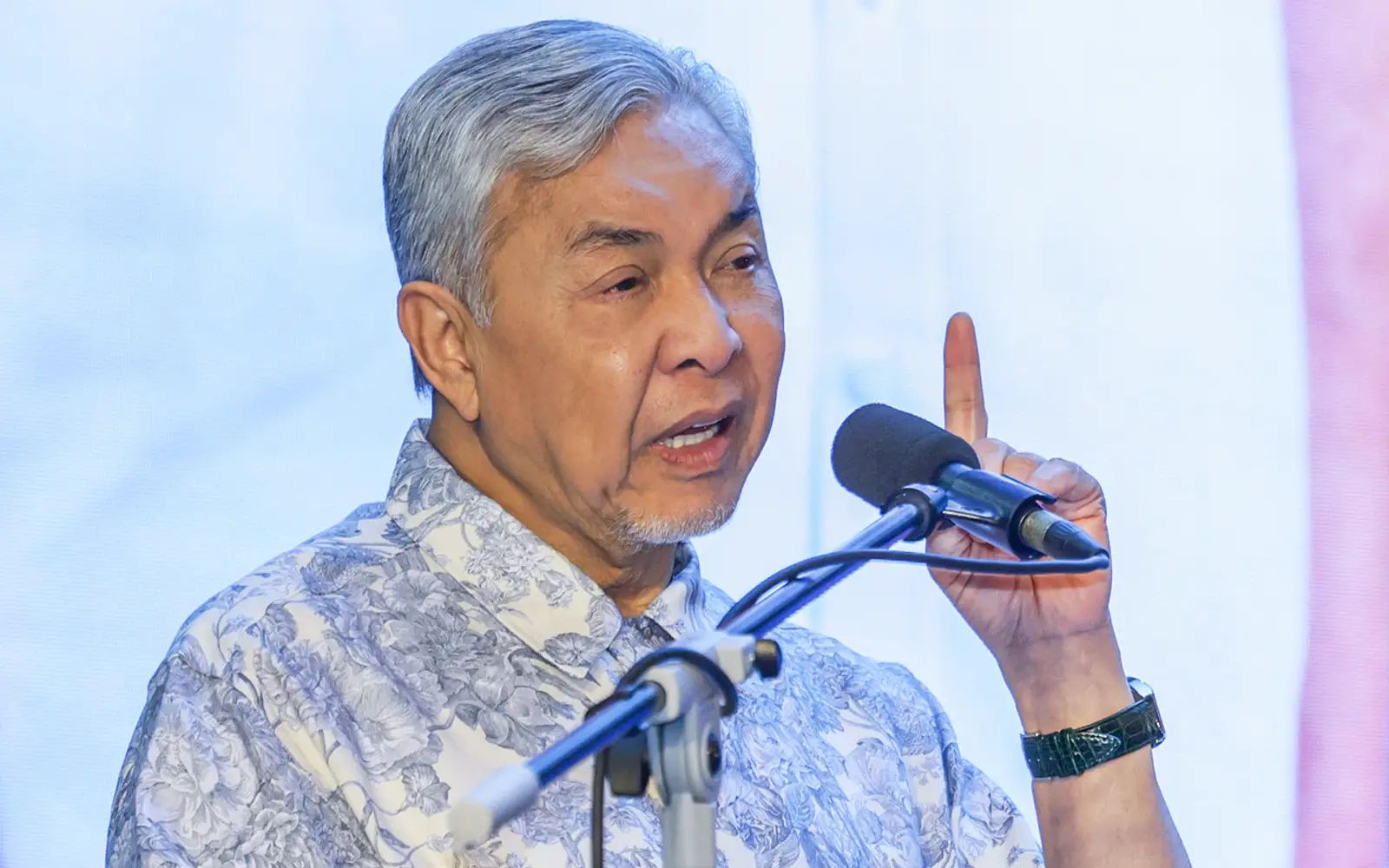
Opening a roundtable aimed at addressing this unease today, Zahid said the gathering of Malay thinkers and leaders in various spheres was not to spread fear, trigger disputes, or blame others.
“This is the unease we feel today: We are many in number, but falling behind in (economic) dominance and ownership. We are glorious in history, but have become uneasy about shaping the future.
“We are gathered based on the awareness that this unease cannot be allowed to fester and evolve into grievances, and we need to act on it,” the Umno president said.
He said this “Malay unease” should not be misinterpreted as a racial matter or a rejection of national unity.
“This is a question of being responsible towards the majority race, who are among the pillars of the nation’s stability, harmony and prosperity,” he said.
Zahid said this unease started surfacing in 2018, hinting at the change in federal government, which was followed by the Covid-19 pandemic and other major events that caused prolonged pressure on the community.
He claimed that there have been more open insults towards Islam and the royal institution in recent years, citing comedian Harith Iskander’s “ham” joke, insults against the Selangor sultan, and the failed attempt to ratify a United Nations convention against racial discrimination, known as ICERD.
“These issues that touch on the sensitivities of Muslims offend us and raise major questions about the respect being shown towards our country’s foundations,” he said.
Zahid lamented that the community does not dominate the value chain in the economy, with Malay entrepreneurs still operating in smaller scales, and Bumiputera equity far beyond government targets.
He also said the Malays had weak social mobility, with education seemingly unable to guarantee jobs, stability, and a future for the young generation.
“The issue of education isn’t about access to universities but the mismatch between knowledge and skills obtained and industry needs.
“In this regard, technical and vocational education and training must be the new pathway for Malay social mobility. Future education must not merely birth good grades but abilities, skills and confidence,” he said.
He also voiced concerns over the apparent diminishing of the Malay language and culture due to globalisation and digital technology, while blaming social media for spreading disunity in Malaysia.
“National unity is becoming increasingly tested with social media used as a space to insult and form prejudices between races. Terms like ‘Type M’, ‘Type C’ and ‘Type I’ may start as jokes, but ultimately belies hidden anger.”
He also said the Malays have lost their political dominance, attributing this to internal divisions and “emotional politics”.
The Barisan Nasional chairman said Malay politics remained bogged down by the need for political revenge while leaders continue to grapple among themselves for power.
“These things only diminish our position in our own arena. Malay politics needs to go back to reason, manners and strategies not just to win elections, but to ensure our community continues to possess the power to determine our future,” he said.