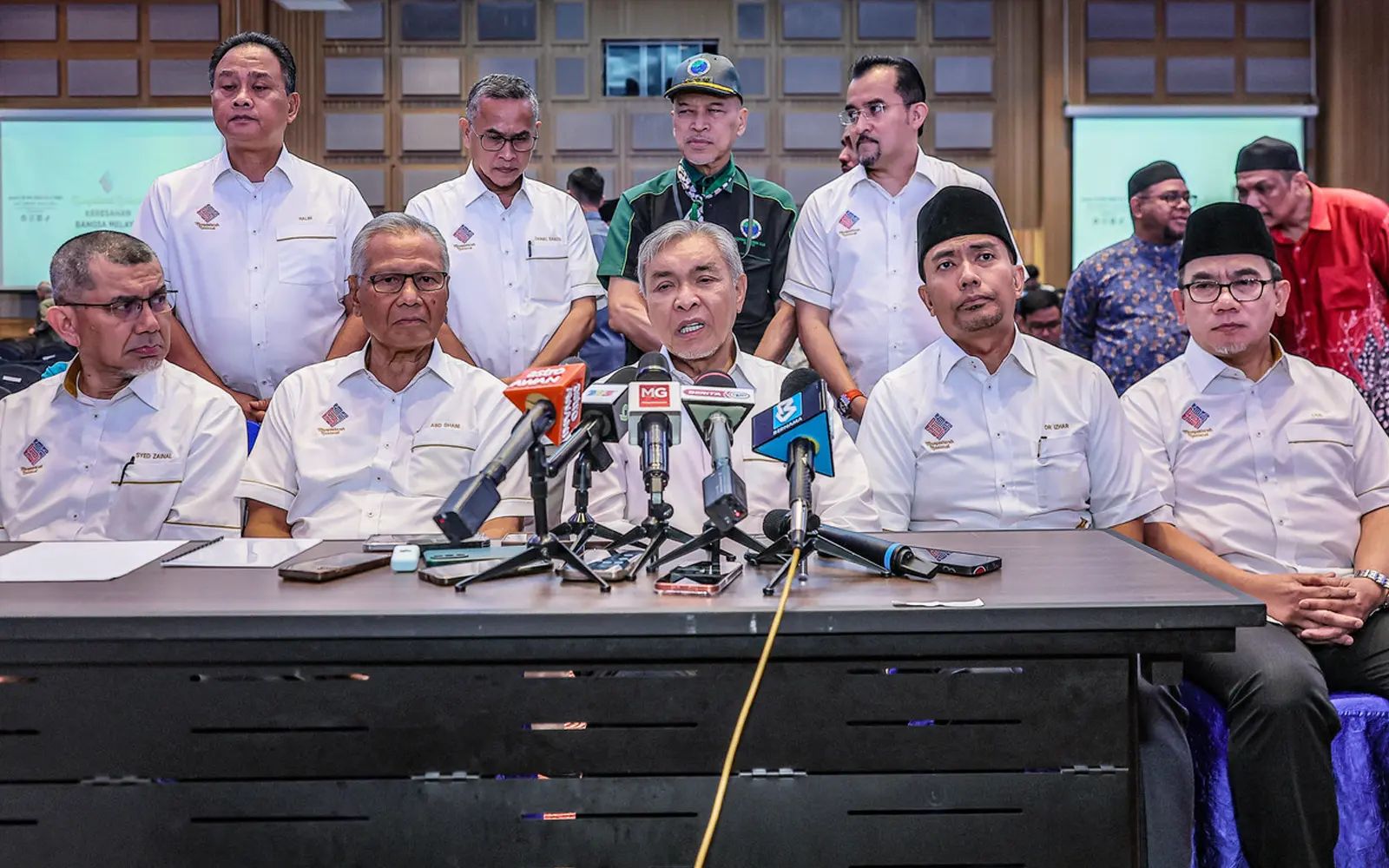
Zahid said the matters discussed centred on constitutional provisions and the concerns of the Bumiputera, adding that other religions or races were not diminished during presentations earlier.
“We are speaking about ourselves, about what we feel, in order to translate this into a national agenda.
“Do not view the Bumiputera and Islamic agenda as extremist. It is a national agenda,” he said at a press conference after the event today.
The Umno president said there was no need to be apologetic about championing the Muslim-Bumiputera agenda as long as such discourse remained within the framework of the constitution and respected the rights of all communities.
He also said the outcomes of today’s roundtable, dubbed Musyawarah Nasional, would not remain mere academic or policy recommendations.
A secretariat has been formed to gather the recommendations raised and conclusions made to ensure they are implemented.
Zahid said he would personally ensure the resolutions are brought to the Cabinet and their implementation coordinated across ministries, agencies, GLCs and government-linked investment companies.
Assistance for Malays important but not a long-term strategy
Zahid said government assistance for the Malays remains important, but the community’s long-term progress cannot be established on that alone.
“Assistance remains important, but it is not a long-term strategy. Malays will rise when they are given knowledge, capital, market access and the courage to compete,” he said.
He also said there were structural “inequalities” in the economy that put the Bumiputera on the backfoot, adding that this went beyond individual attitudes.
“The Malay economic problem is not merely an issue of individual attitudes, but a structural inequality that must be corrected,” he said.