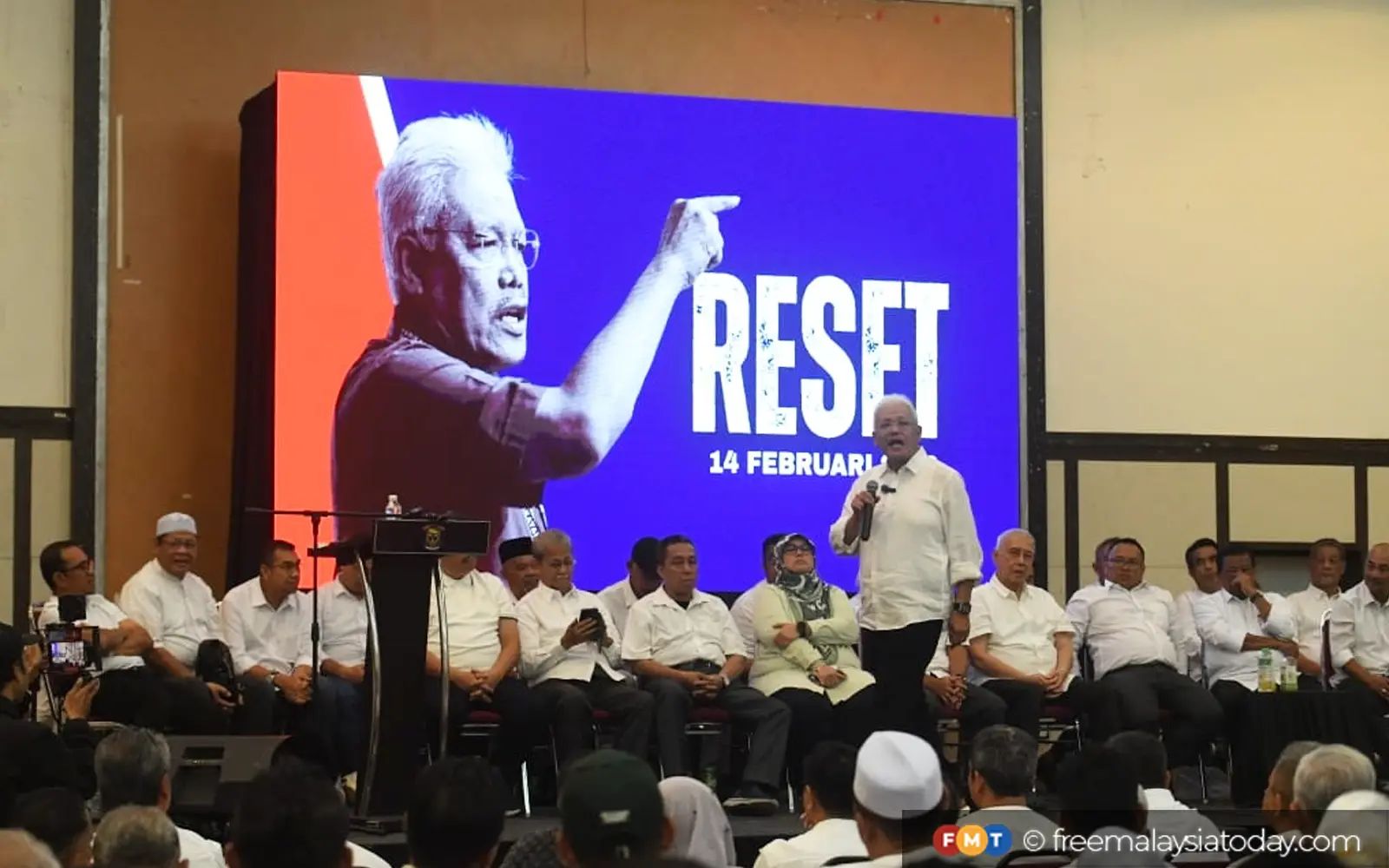
Arvin Tajari of Universiti Teknologi Mara said although Sabah Reset is backed by former Bersatu members aligned with Hamzah, the movement has yet to present a clear identity that resonates with local political narratives.

“The sentiment against national parties remains strong following Sabah’s ‘political tsunami’,” Arvin said, referring to the “Sabah for Sabahan” sentiment that dominated the state election last November.
He warned that failure to align with local aspirations could see Reset, whose members are largely drawn from Perikatan Nasional, particularly Bersatu, meet the same fate as PN.
In the 17th Sabah state election, peninsula-based Barisan Nasional won only six seats, while Pakatan Harapan and PN secured just one each.
Arvin was commenting on remarks by Sepanggar Reset chief Norsahar Ahmad that the movement is gaining ground in Sabah.
The Reset movement was announced by Hamzah, the former Bersatu deputy president, a day after his expulsion from the party on Feb 13.
“The movement has yet to be embraced by the public and remains largely confined to political observers,” Arvin said, adding that the challenge is compounded by its inability to distinguish itself clearly from other national parties.

Meanwhile, Syahruddin Awang Ahmad of Universiti Malaysia Sabah said claims of Reset’s growing influence must be assessed realistically, based on actual public reception.
“Despite its reform narrative, the reality is that Sabah voters are now more sceptical of movements perceived to be peninsular-centric,” he said.
Syahruddin said failure to understand local needs and political identity could see the movement being rejected before it has a chance to take root, mirroring the struggles faced by other national coalitions trying to gain a foothold in Sabah.
“If its direction remains unclear and out of sync with grassroots expectations, this movement will merely become a supporting actor in Sabah politics,” he said.