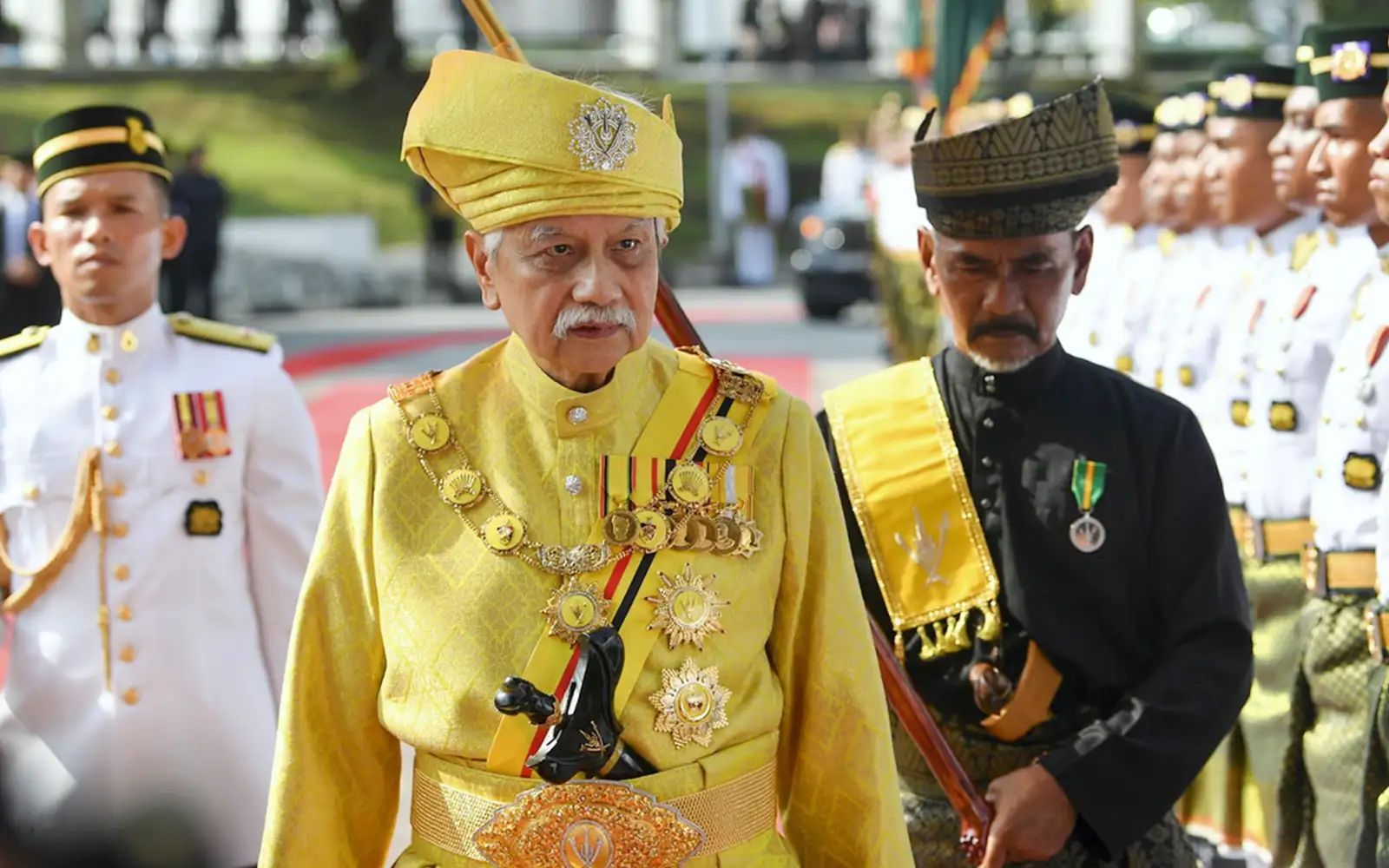
Tuanku Muhriz said the absence of the state dignitaries who usually accompany him at the opening of state assembly sessions – the four Undangs (chieftains) and the Tunku Besar of Tampin – did not affect the legitimacy of the proceedings.
“I pray to Allah that my state and its people will continue to be blessed with prosperity and harmony under the leadership of menteri besar Aminuddin Harun and the state executive council,” he said.
“I am deeply grateful that the strong cooperation within my government has continued to deliver excellent performance over the past year,” he said in his royal address at the opening ceremony of the fourth session of the 15th Negeri Sembilan state legislative assembly at Wisma Negeri, Seremban.
The Tunku Ampuan Besar of Negeri Sembilan, Tuanku Aishah Rohani Tengku Besar Mahmud, was also in attendance.
On Monday, Aminuddin said the state government did not recognise the recent move to depose Tuanku Muhriz as the Yang di-Pertuan Besar of Negeri Sembilan.
The former Undang of Sungai Ujong, Mubarak Dohak, announced the removal of Tuanku Muhriz in a press conference with the three other Undangs last Sunday.
In Negeri Sembilan, the four Undangs represent the main traditional districts or luak: Sungai Ujong, Jelebu, Johol, and Rembau.
The four Undangs are traditional territorial chiefs who play a central role in electing the Yang di-Pertuan Besar of Negeri Sembilan and advising on customary law under the state’s adat perpatih.
Tuanku Muhriz also reminded senior office holders in the state to make decisions wisely, saying the positions with which they are entrusted come with significant responsibilities.
He said decisions should not be made in haste or influenced by emotion or self-interest.
“Decisions must be made after examining all relevant facts and information,” he said.
He said failure to adhere to these principles could undermine administrative integrity and the well-being of the state.
Tuanku Muhriz also urged netizens to be more responsible when commenting on or sharing information on social media.
“Do not easily believe or spread news without verification and confirmation,” he said, adding that the spread of false information could have negative effects on society and the state.