In Pekan Nenas, Johor, this was once the rhythm of everyday life. For decades, families worked these plots from sunrise to sunset, bracing against the heat, the rain and sometimes even wild animals that slipped in to steal the fruit.
Lee Wei Heng, 22, grew up listening to his grandfather talk about those long days in the fields.
“My grandparents didn’t own any pineapple farms. They were merely workers. And they worked their whole lives to feed their children,” Lee shared with FMT Lifestyle.
“I remember my grandfather telling me how hard the work was, and he told my dad not to continue in this line.”
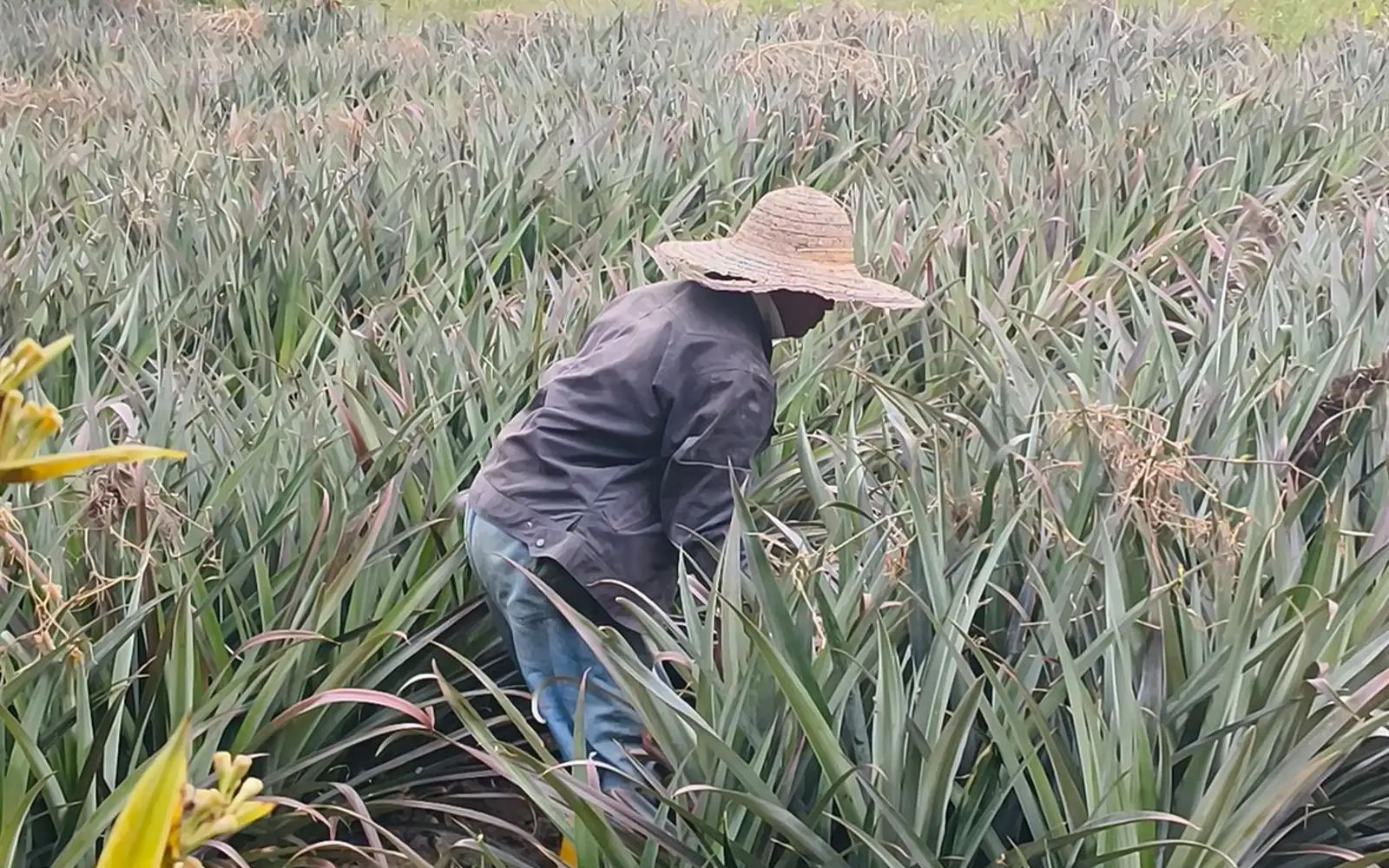
Indeed, the work was slow, physical and unforgiving. It involved walking row after row under the sun, cutting, carrying, stacking. By the time the workers were paid, most of it had already been spoken for – groceries, bills, nine children to feed.
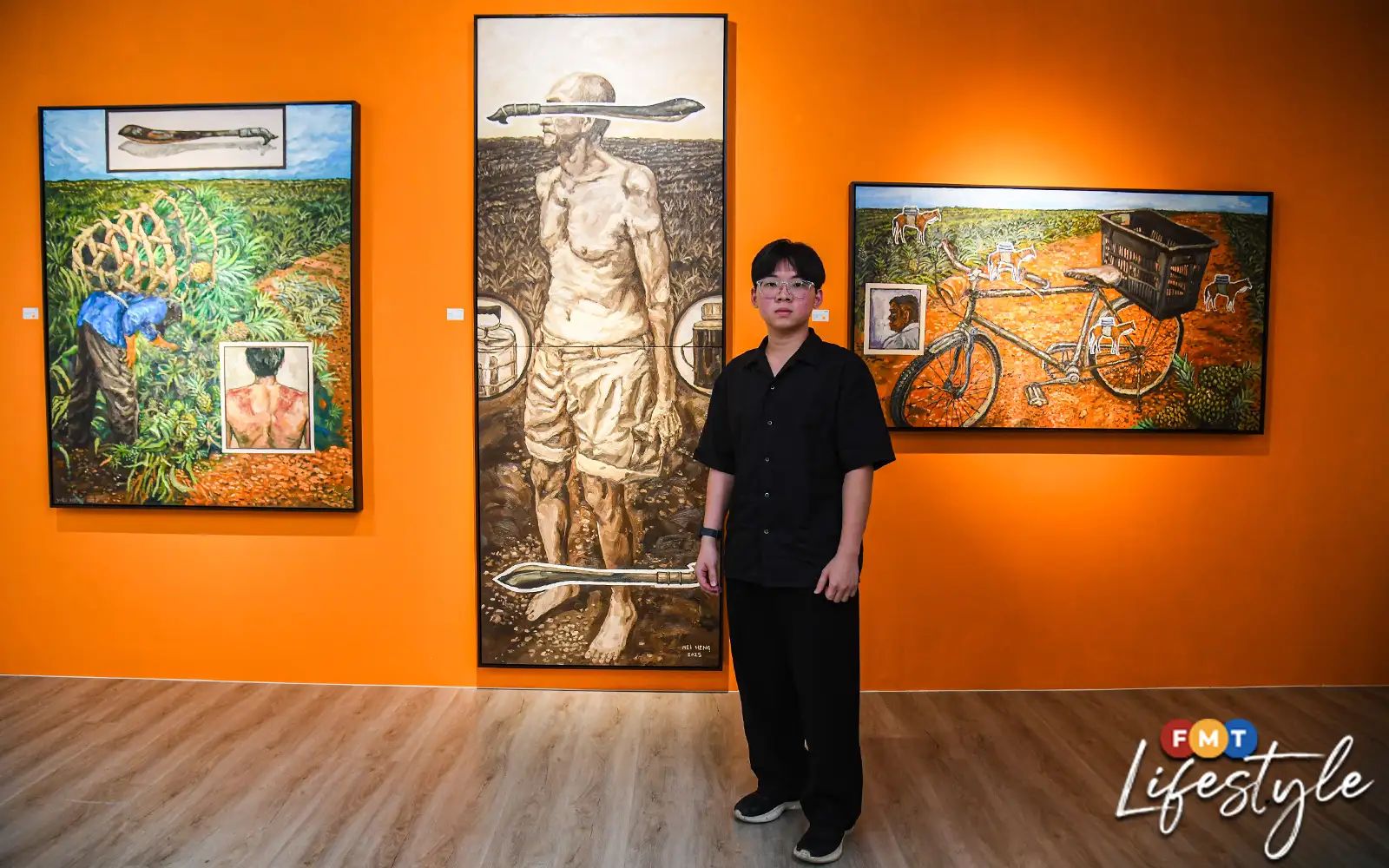
Years later, those memories followed the young artist into the studio, eventually becoming his first solo exhibition, Ananas, at Artas Gallery.
The 17 oil paintings trace the lives of pineapple farmers in Pekan Nenas – their grit, routine and resilience. But the paintings came long after the experience itself.
After moving away at 19 to study fine arts, Lee kept returning to the stories he grew up with.
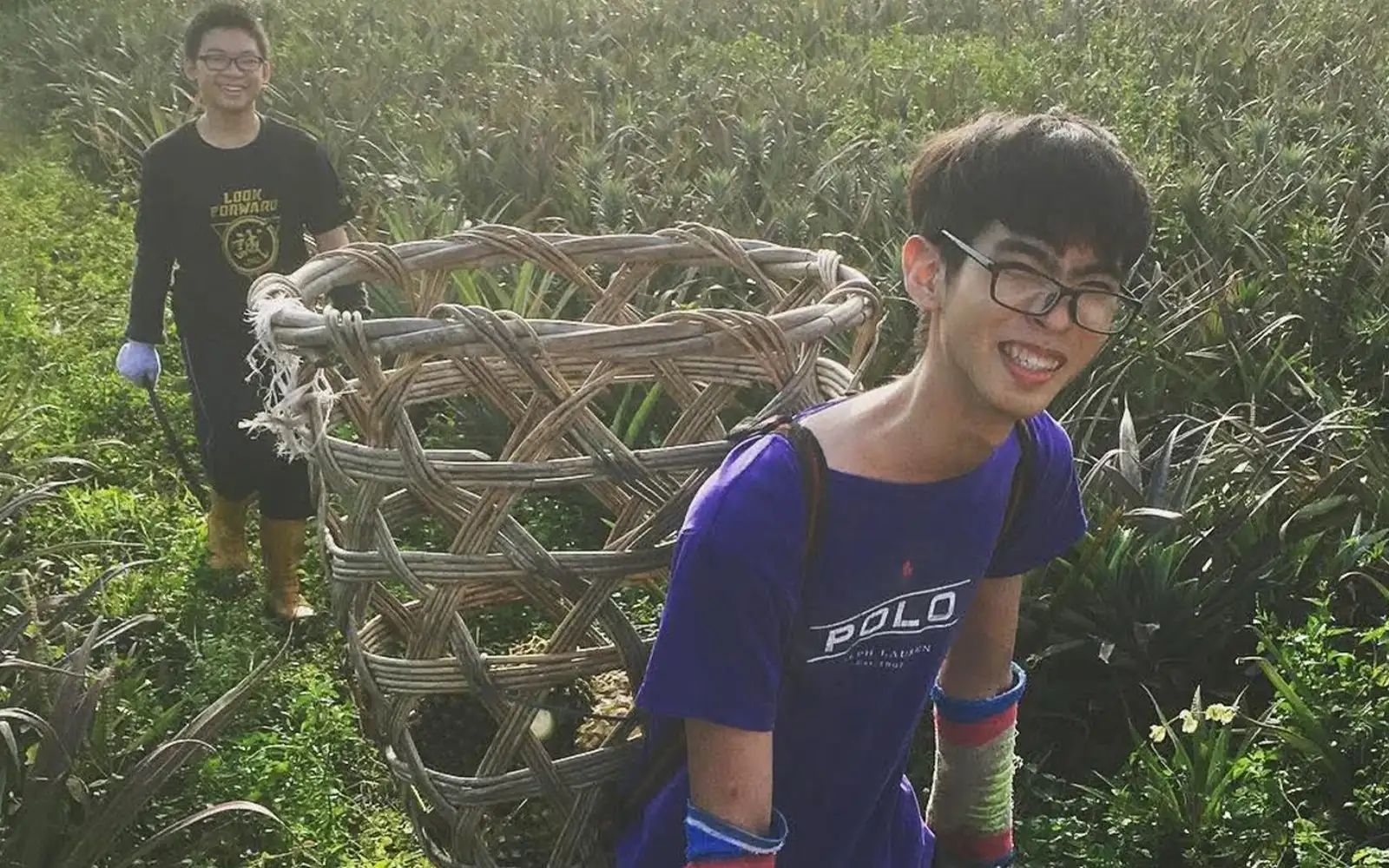
As a teenager, he had tried the work himself, spending school holidays in the plantation, planting, cutting and hauling pineapples into heavy baskets strapped behind a bicycle.
Leaves scraped his skin, thorns snagged his clothes, and by noon his arms felt like lead. He lasted only weeks; his grandparents did it their whole lives.
That contrast – between choice and necessity – stayed with him. He hadn’t planned to document any of it. But the memories kept resurfacing: his grandfather’s voice, farmers cycling home at dusk, parangs hanging from their hips.
So Lee began to paint, returning home to speak with older farmers and piece their stories together.
“What I found out was that they are very religious. Every day, they pray for good weather, for rain, for protection against wild animals that destroy the crops. That’s why you will find nine temples in this very small town,” Lee said.
“But just like my grandparents, these old people also told me not to be part of pineapple farming as it’s very harsh.”
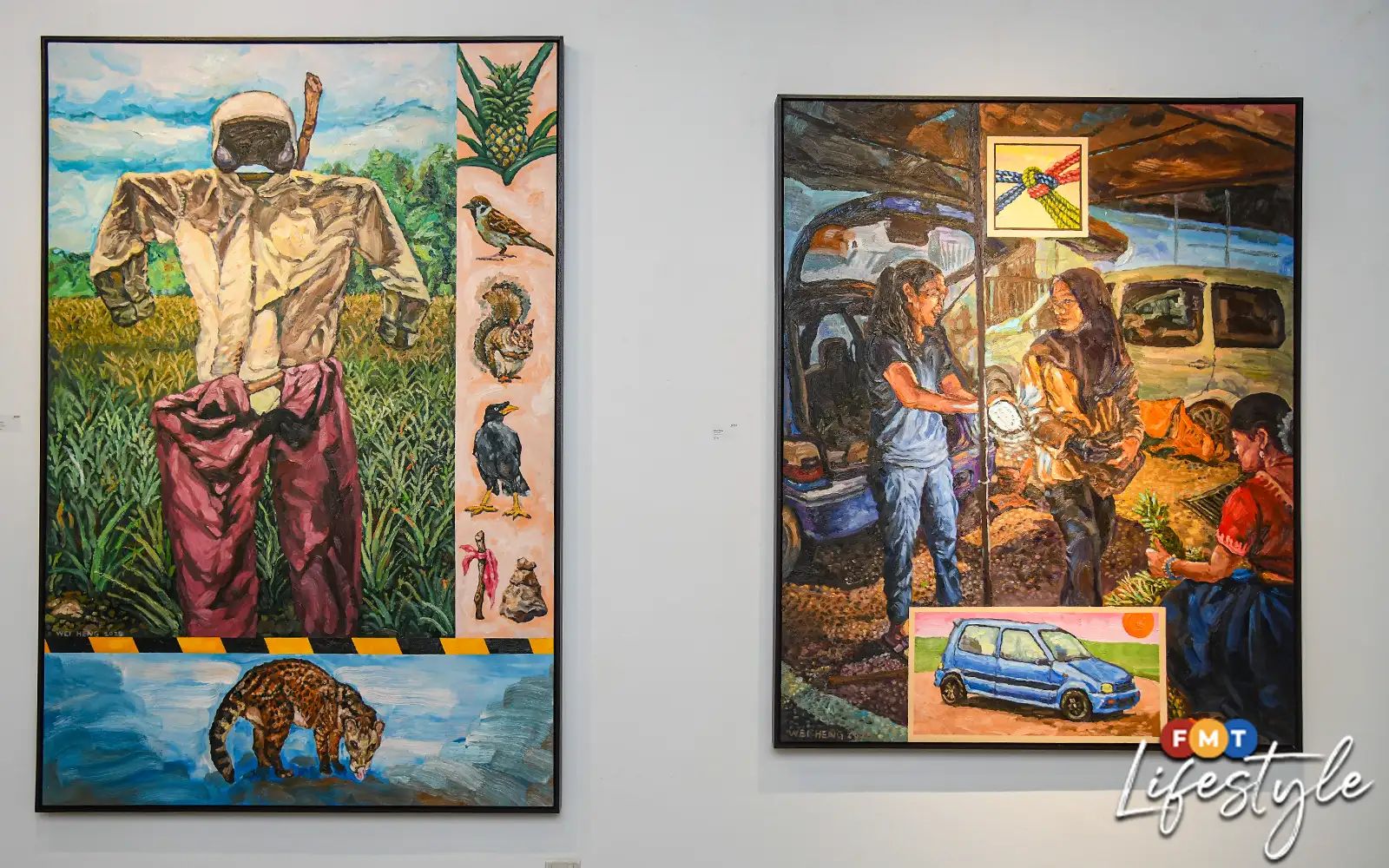
And it is this duality of harshness and diligence that Lee astutely captures in his paintings.
Take for instance the towering “Old Farmer” monochromatic painting. It depicts an old man in just his shorts, standing in a pineapple farm, barefoot. What’s striking are the two parangs, one placed across his eyes and the other at his feet … almost hiding his identity.
“When you go to the plantation, you always see the farmer but you don’t know who they are. You can’t see their faces,” Lee explained.
“But the parang is also hiding the tears in his eyes and the pain in his feet because of how hard being a pineapple farmer is.”
In fact, the parang motif appears in many of Lee’s paintings in “Ananas”. For him, the parang isn’t just a tool. It’s almost an extension of the body.
“The parang is the most important tool in a farmer’s life. That’s the only way they can harvest the pineapples,” he said.
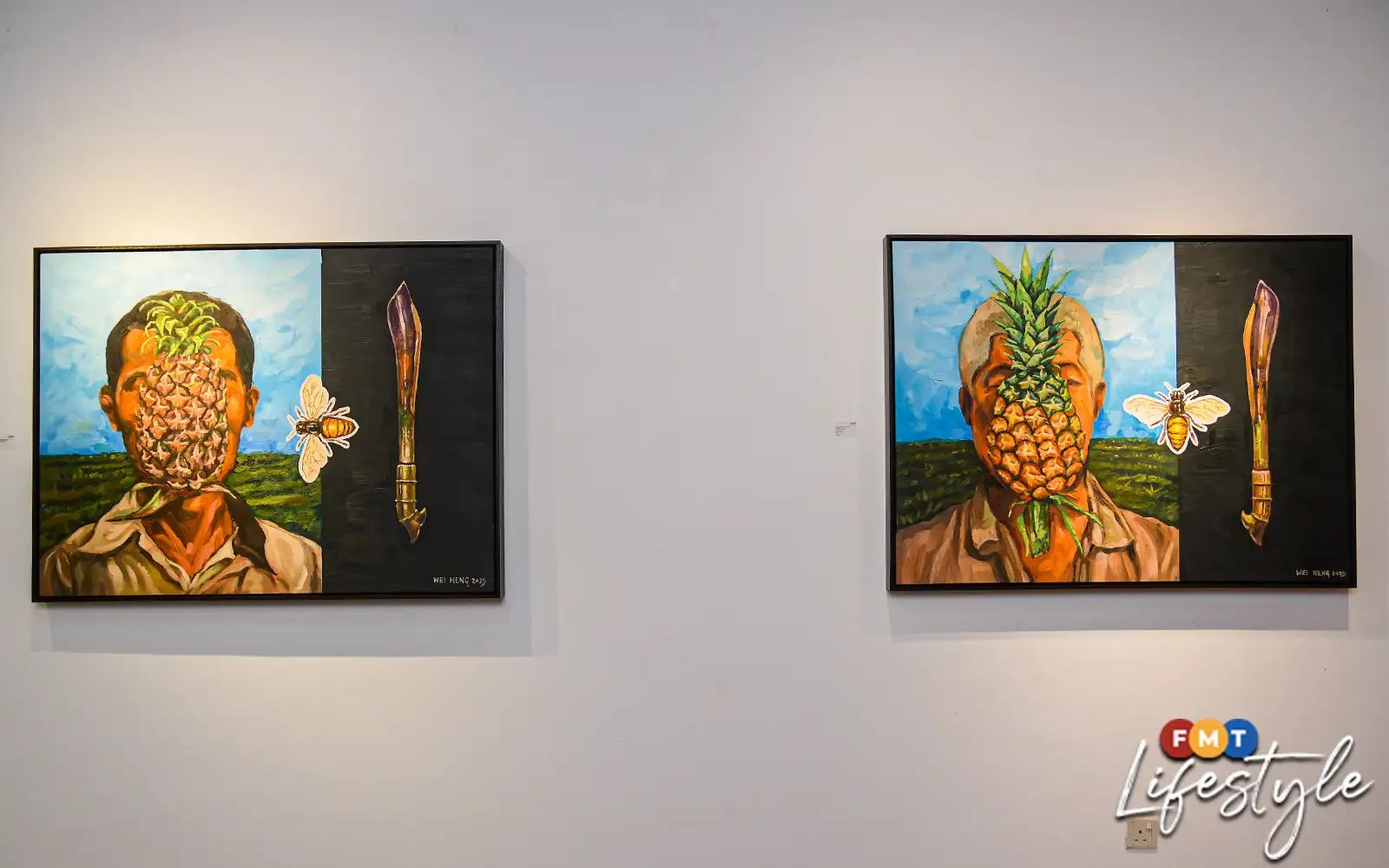
Today, younger residents leave for factory jobs nearby. The plantations are still there, but fewer hands tend them. What remains are fragments – old tools, fading stories, and the muscle memory of a generation that grew up with sap-stained hands.
And through these paintings, Lee hopes others might pause long enough to see the people behind the fruit – the ones who woke before sunrise, worked until their palms burned, and quietly built a town from the ground up.
‘Ananas’ by Lee Wei Heng (Now till Feb 14)
Artas Galeri
36, Jalan PJU 5/20D
Kota Damansara
47810 Petaling Jaya
Selangor
For more information, visit Artas Galeri’s website, and follow the gallery on Facebook and Instagram. Follow Lee Wei Heng on Instagram.