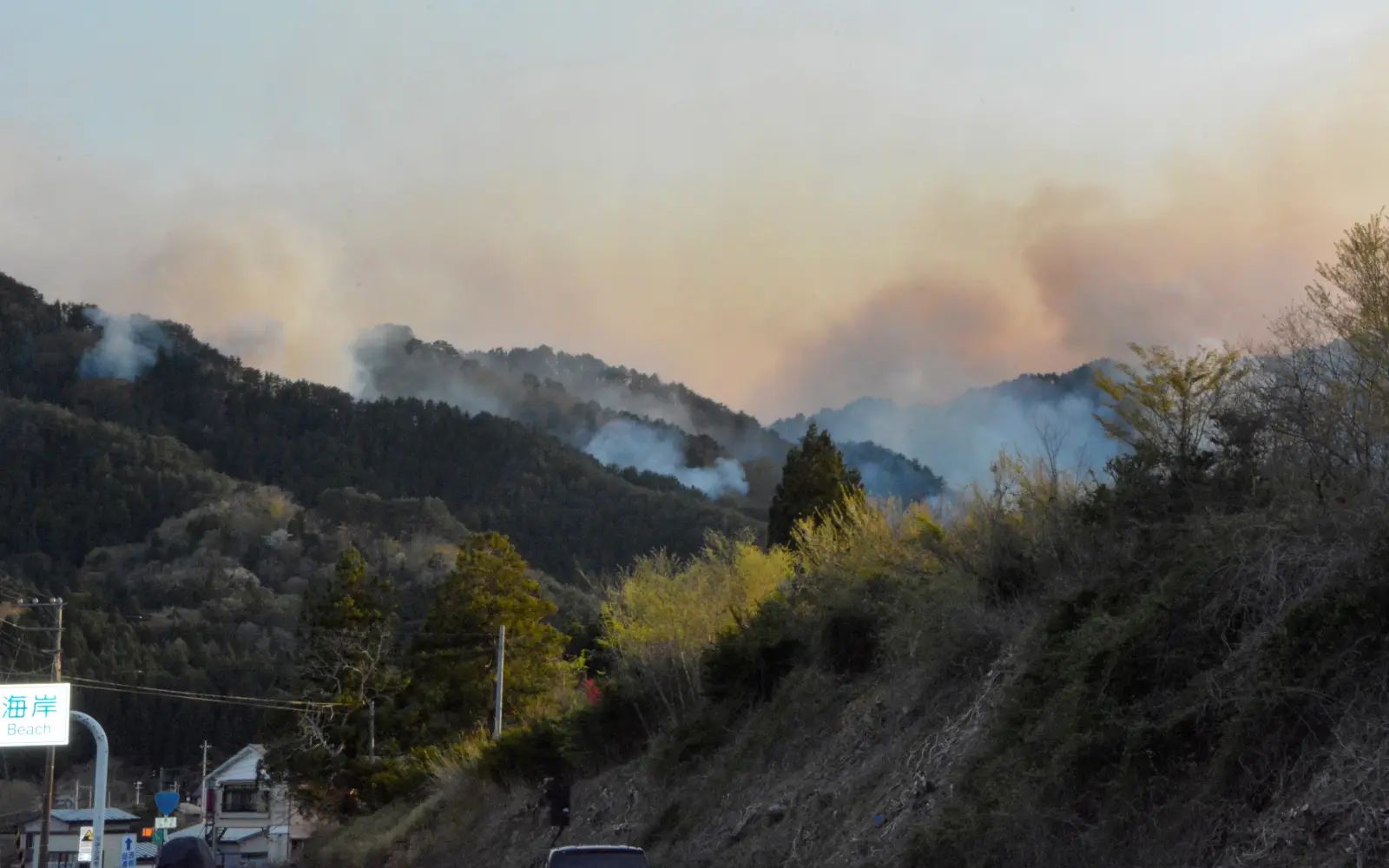
Hundreds of firefighters and more than 1,000 military personnel had battled the blazes since late April as they burnt around 1,600 hectares (4,000 acres) across the mountainous Iwate region.
The affected area is almost five times the size of New York City’s Central Park.
At least eight buildings were damaged and two people suffered minor injuries, according to the Fire and Disaster Management Agency. Thousands of people were evacuated as fires picked up.
Otsuchi town mayor Kozo Hirano told reporters on Saturday that he had been “informed that… the fire had been brought under control” after visiting the area with fire officials.
He credited aerial and ground firefighting operations as well as heavy rainfall for containing the flames.
But Hirano said authorities would remain vigilant, as there was a possibility that smouldering embers remained.
Kyodo News described the blaze as Japan’s second-largest wildfire in over 30 years.
Increasingly dry winters have raised the risk of wildfires.
Last year, Iwate suffered a separate wildfire that burnt 2,600 hectares, the largest in Japan since 1975, when 2,700 hectares were scorched by fire in Kushiro, on the northern island of Hokkaido.
Scientists have long warned that climate change caused by mankind’s burning of fossil fuels will make periods of drought more intense and longer-lasting, creating the ideal conditions for wildfires.