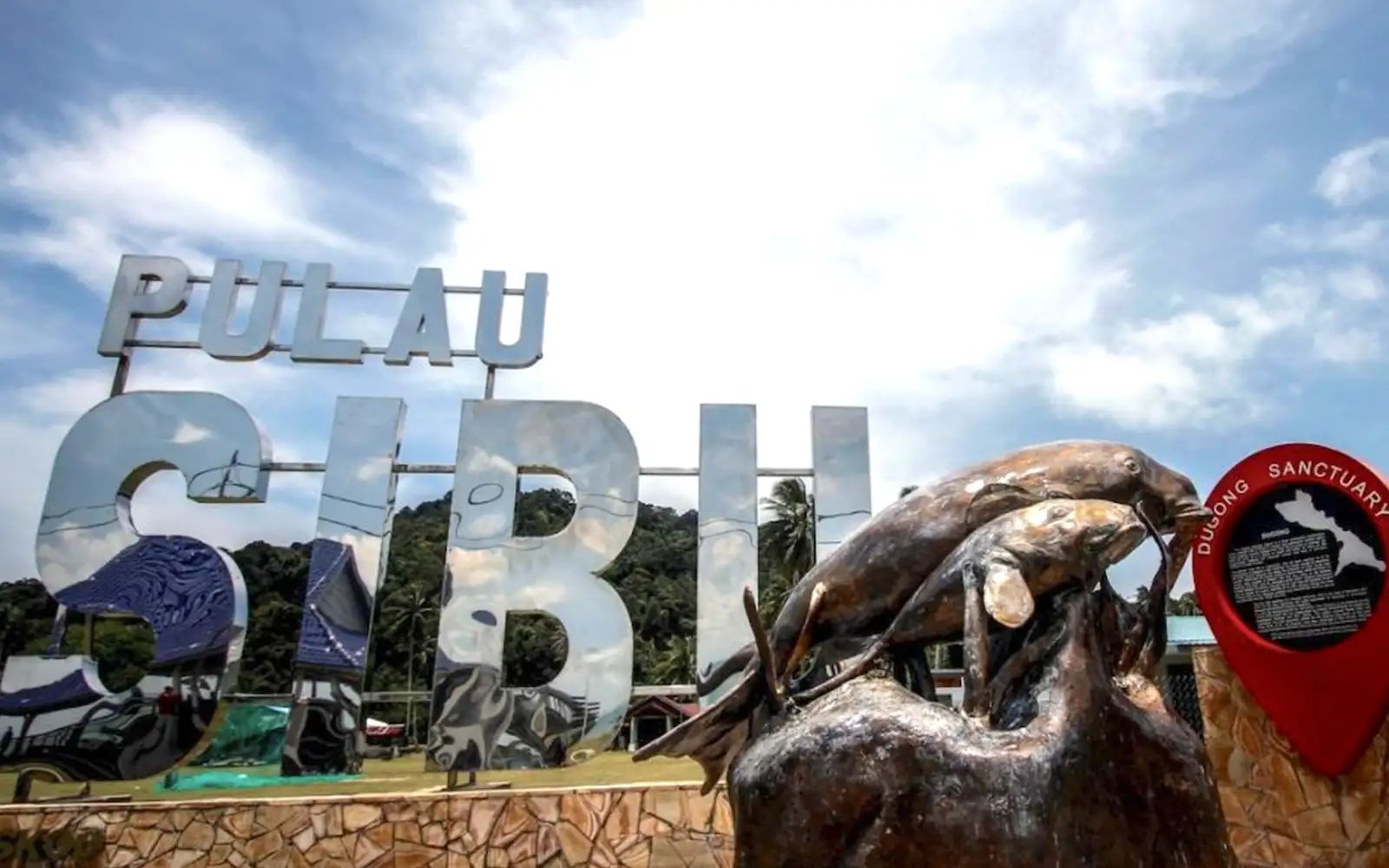
But as the day progressed, the stillness in the air revealed something less visible and far more concerning. Despite efforts by day trippers to stay hydrated and limit physical activity, the heat became increasingly difficult to manage by late morning.
What began as mild discomfort soon developed into dizziness, nausea and fatigue – early signs of heat exhaustion.
This recent experience became a real-world illustration of how heat and humidity interact to affect the human body.
On that day, Pulau Sibu recorded a high of about 32°C, while humidity levels were estimated at around 85% – conditions not unusual for Malaysia’s coastal regions. These numbers, however, do not fully capture the level of heat stress this writer experienced.
Wet bulb temperature (WBT), which combines air temperature and humidity, provides a clearer picture of how effectively the body can cool itself through sweating. When humidity is high, sweat evaporates more slowly, reducing the body’s ability to release heat and causing one’s core temperature to rise more quickly.
Based on conditions that day, the WBT was estimated at about 29.9°C – close to the threshold where the body begins to struggle.
“Most of the sweat cannot evaporate and, therefore, you build heat very fast,” explained Dr Jason Lee, director of the Heat Resilience and Performance Centre at the National University of Singapore.
While the theoretical upper limit for human survival is around 35°C WBT, a 2022 study by Pennsylvania State University found that even healthy adults may experience dangerous strain at 30-31°C.
When hydration alone isn’t enough
One common assumption is that drinking more water can offset extreme heat. While hydration remains essential, Lee noted that it is not sufficient when environmental conditions prevent sweat from evaporating efficiently.
Cooling strategies that reduce core body temperature directly become more important. Immersion in water, for instance, is significantly more effective than air cooling.
“Once you are in the water, it is actually 24 times more powerful than in the air,” he said.
Simple measures such as seeking shade, improving airflow such as by using a portable fan, and reducing exposure to direct sunlight can also help mitigate heat stress.

Southeast Asia is already experiencing rising temperatures and increasing frequency of extreme heat events. In Malaysia, studies have shown that wet bulb globe temperature (WBGT), a broader measure that also accounts for wind and solar radiation, has risen over time.
A 2023 study published in the journal Sustainability reported WBGT levels reaching 30.5°C in parts of the western coastal region of peninsular Malaysia, indicating growing heat stress risks.
Health authorities have also begun recording more heat-related cases, including the death of a runner who took part in a Penang event on April 25.
And with indications of another strong El Nino occurrence, the country may face further periods of drought, haze and record-breaking heat.
Adapting to a hotter climate
Despite the risks, experts caution against avoiding outdoor environments entirely. Instead, regular exposure to heat, through safe and controlled activity, can help the body adapt over time.
At the same time, recognising early warning signs – including dizziness, nausea and excessive fatigue – remains critical.
Lee highlighted that while many Malaysians rely on air-conditioning to escape the heat, this can reduce the body’s ability to acclimatise.
“The problem we face is not one of heat stroke, because we have enough cooling facilities to avoid the heat,” he said.
“But we are seeing our whole population not living to their true potential, because of the very fact that we avoid the heat as much as possible.”
For this writer, the experience in Pulau Sibu served as a reminder that in a warming climate, heat is no longer defined by temperature alone. Understanding humidity, and how the body responds to it, may be key to staying safe in the years ahead.
This article was originally written by Nina Muslim.