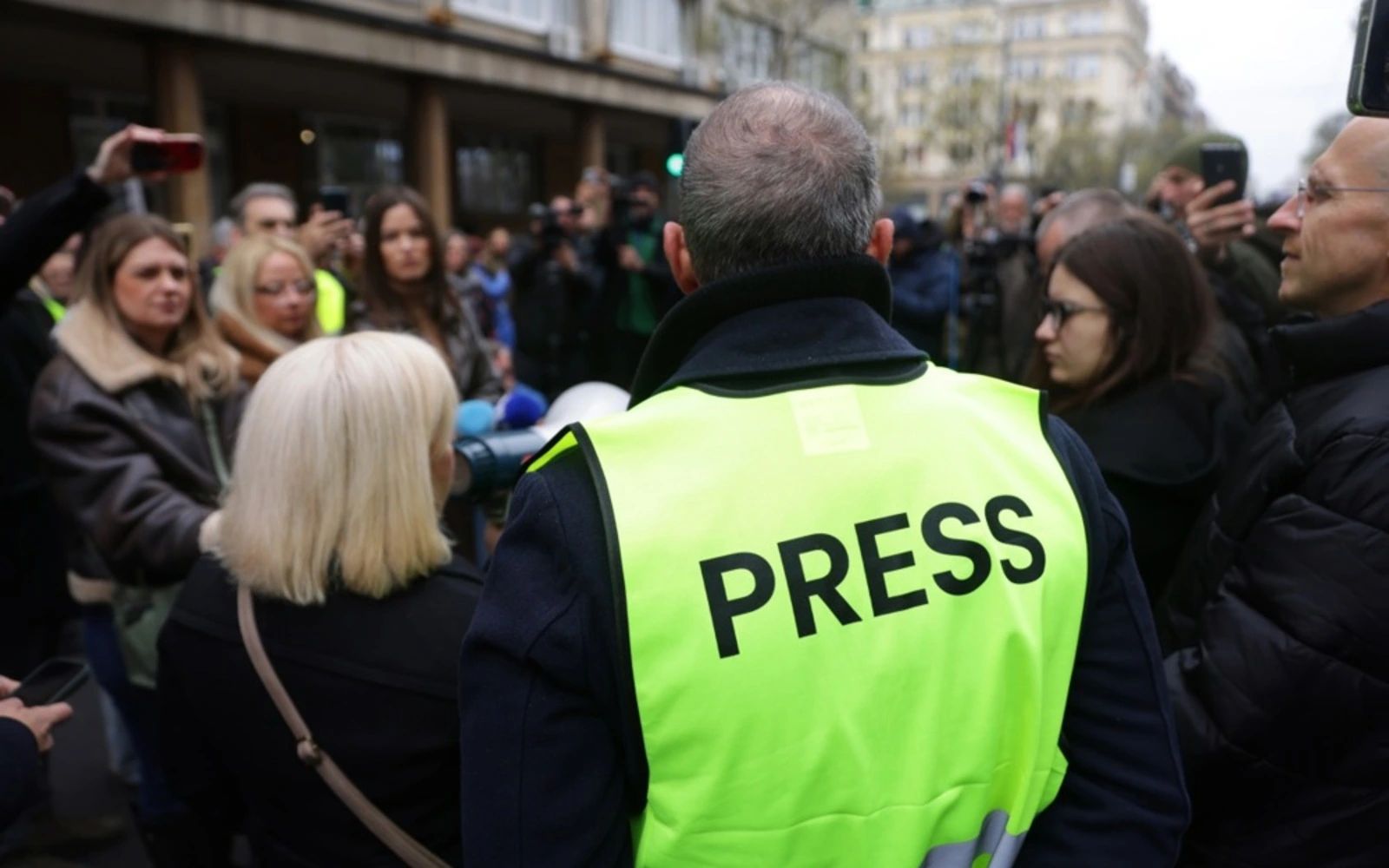
The media rights watchdog cited as examples US President Donald Trump’s “systematic” attacks on journalists and Saudi Arabia, which executed a journalist in 2025.
“For the first time in the (RSF) Index’s 25-year history, more than half the world’s countries now fall into the ‘difficult’ or ‘very serious’ categories for press freedom,” a statement said.
“The average score for all countries and territories worldwide has never been so low,” it said.
At the same time, the share of the world’s population living in a country where the press freedom situation is considered “good” has plunged from 20% to less than 1%.
Only seven countries in Northern Europe, led by Norway, fall into this category.
“The US, which had already fallen from a ‘fairly good’ to a ‘problematic’ situation in 2024, the year of Donald Trump’s re-election, has dropped a further seven places to 64,” it said.
Beyond Trump’s attacks on the press – “a systematic policy” – the situation in the US has also been marked by the detention and subsequent expulsion of Salvadoran journalist Mario Guevara, who denounced the arrest of migrants, and by drastic cuts to funding for US international broadcasting, the report said.
“Vladimir Putin’s Russia (172nd) has become a specialist in using laws designed to combat terrorism, separatism and extremism to restrict press freedom,” RSF warned.
“As of April 2026, the country held 48 journalists behind bars,” it said.
The steepest decline in 2026 was in junta-led Niger (120th, down 37 places), underscoring the wider decline in press freedom in the Sahel region seen in recent years as attacks by armed groups and ruling juntas have suppressed the right to balanced information from diverse sources”.