From Azam Mohd
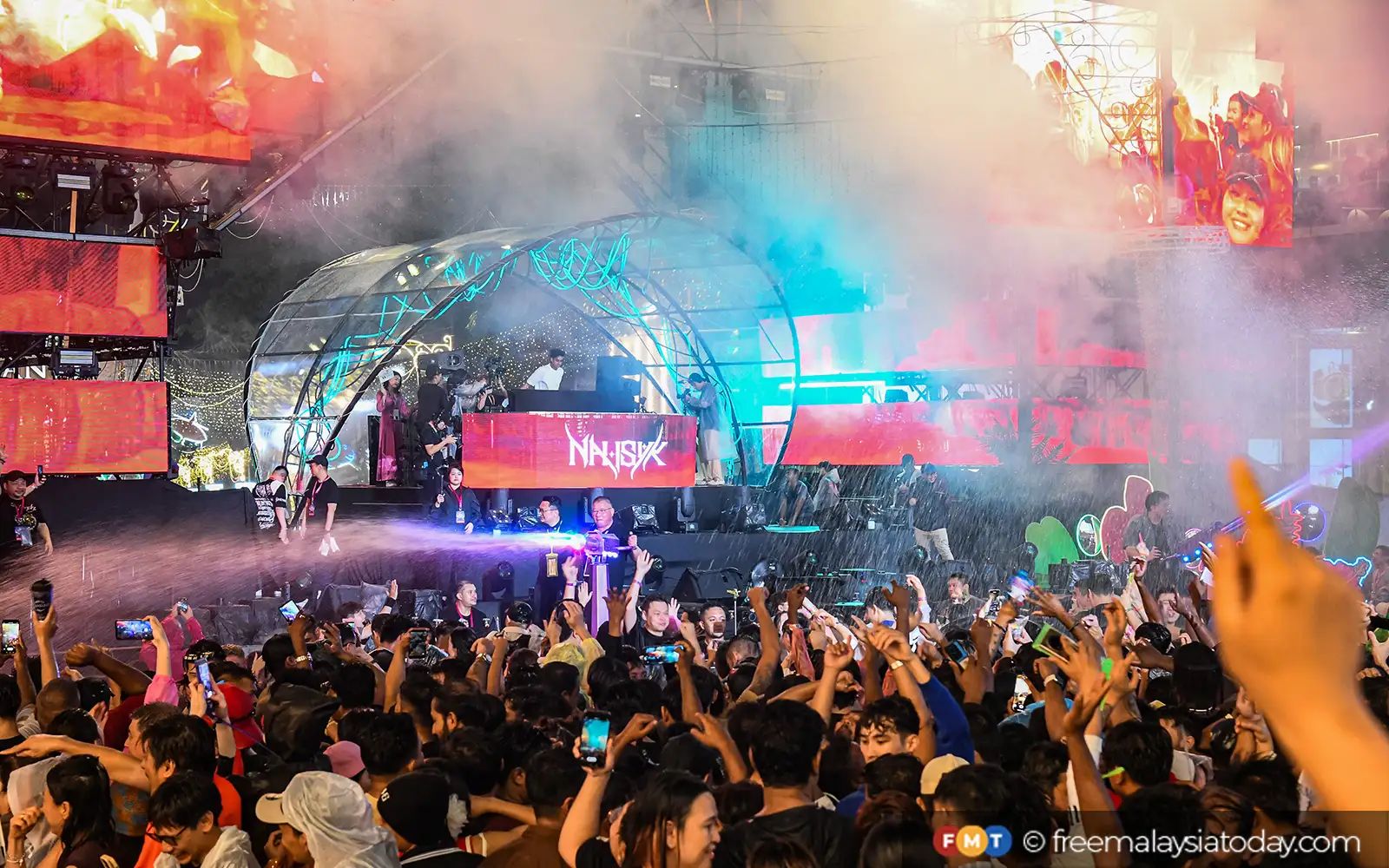
The debate over the Rain Rave Water Music Festival 2026 is not simply about entertainment; it tests how a diverse, constitutional nation balances moral concerns with sound governance and economic reality.
The objections raised by Umno Youth chief Dr Akmal Saleh reflect genuine unease among parts of society, but the deeper question is whether such concerns are grounded in enforceable standards or shaped by selective interpretation that risks weakening institutional balance.
Malaysia’s constitutional framework offers clear guidance. Islam is the religion of the Federation, yet the country is not governed as a theocracy. Public policy must therefore operate within a system that respects religious sensitivities while accommodating diversity.
This balance is not abstract; it is reflected in regulatory processes, ministerial accountability, and legal oversight. Any criticism of a public event must be assessed not through rhetoric, but through verifiable compliance with laws, licensing requirements, and public conduct rules.
The federal territories Islamic religious department’s (Jawi) position, as publicly expressed, raises valid concerns about moral boundaries and social impact. Islamic teachings do not reject entertainment entirely but emphasise moderation, responsibility, and ethical limits.
The Bayan Linnas guidance supports this approach. However, it is important to distinguish between advisory views and actual regulatory breaches.
If an event complies with legal requirements, avoids prohibited elements such as alcohol, and meets safety and licensing standards, the issue moves from legality to perception. Public policy cannot be driven by perception alone, especially when perceptions differ across a plural society.
This distinction is essential for consistent governance. If decisions were based purely on subjective discomfort, policymaking would become unpredictable and reactive. It would create a precedent where any activity could be challenged based on opinion rather than evidence.
Policy should be guided by clear, structured criteria rather than the volume of public objection. Otherwise, institutional credibility risks being replaced by short-term responses to shifting sentiments.
The economic dimension adds further complexity. Tourism plays a significant role in Malaysia’s economy, supporting GDP growth, job creation, and the sustainability of small businesses. Data from the statistics department and global tourism studies consistently show that large-scale events stimulate activity across multiple sectors.
Presenting economic benefits as secondary to moral concerns creates a false divide.
In reality, national policy must balance both. Economic growth and ethical governance are not opposing goals; they are interconnected pillars of long-term development.
Ministerial decisions to support tourism-related events should therefore be judged based on measurable outcomes such as regulatory compliance, inclusivity, economic contribution, and public order.
Labelling such initiatives as inherently immoral without clear evidence oversimplifies a complex issue. It also raises questions of consistency.
If the same standards were applied across the board, many urban activities, including concerts and cultural festivals, would face similar scrutiny. Selective application suggests that the debate may be shaped as much by positioning as by principle.
The tone of public criticism also deserves attention. Statements that invoke extreme outcomes, including hopes for disruptive natural events, may attract attention but do little to advance constructive dialogue. Effective governance requires measured responses, evidence-based reasoning, and respect for institutions. Emotional rhetoric can mobilise support, but it rarely produces lasting policy solutions.
At the same time, moral concerns should not be dismissed. In a society where religion plays an important role, public sensitivity must be recognised. The responsibility lies with organisers and authorities to ensure that events remain within acceptable ethical limits. This includes setting clear guidelines on conduct, enforcing regulations effectively, and maintaining transparent communication with stakeholders.
A balanced framework that integrates economic and ethical considerations is both achievable and necessary.
The broader significance of this debate goes beyond a single festival. It reflects how Malaysia manages identity, governance, and development in a complex social landscape. When public narratives become overly rigid, they risk undermining the institutional balance that holds the country together. When governance is grounded in law, evidence, and inclusivity, it strengthens both public trust and national cohesion.
Ultimately, the issue is not whether entertainment should exist, but whether it can be managed responsibly. Malaysia already has the policy tools to achieve this. The challenge is to apply them consistently, without giving in to selective narratives or escalating rhetoric. A mature policy environment depends on discipline, clarity, and fairness.
In this light, the Rain Rave debate serves as a reminder that governance is not about asserting moral dominance, but about maintaining balance.
When institutions function properly, they protect both societal values and economic progress. When they are drawn into selective disputes, credibility is the first to suffer.
Azam Mohd is an FMT reader.
The views expressed are those of the writer and do not necessarily reflect those of FMT.