Samirul Ariff Othman, an adjunct professor at Universiti Teknologi Petronas, said the move signals a shift towards tighter fiscal discipline and shows the government as proactive.
“It is necessary to view current expenditure restraint as a measured and rational response to optimise costs,” he said, adding that the measures were necessary given the present uncertain times.
“The deferral of non-essential spending, the moderation of administrative outlays, and the recalibration of budgetary priorities are consistent with established principles of fiscal management under conditions of uncertainty.”
The spending cuts follow a government directive for ministries to trim budgets following a prolonged disruption to global oil supply—with Putrajaya also reviewing subsidy mechanisms, including more targeted approaches for fuel support.
The Treasury said a review of operating expenditure is imperative, with the subsidy bill projected to surge from the sum of RM15 billion initially allocated for 2026 to RM58.4 billion.
Supply shock reshapes policy response
Samirul said the current crisis differs from previous episodes as it is driven by supply constraints rather than prices alone.

“In a supply-driven crisis, indiscriminate expansion of spending can be counterproductive. It risks fuelling inflation without addressing underlying shortages,” he said.
“By contrast, disciplined expenditure preserves fiscal space, anchors expectations, and signals to both domestic and international stakeholders that policy remains grounded in prudence.”
Samirul said the distinction between a price shock and a system shock was “structural”.
“When supply itself becomes uncertain, the policy response must necessarily shift from cushioning prices to preserving availability and stability,” he said.
Subsidy pressures and rising demand
Samirul said fiscal pressures have intensified due to rising subsidy commitments and structural increases in demand.
“Malaysia now consumes approximately 2.3 billion litres of petrol and diesel each month,” he said, adding that the post-pandemic recovery and higher vehicle ownership have contributed to increased consumption.
He said the country has had to assume the responsibility of maintaining stable retail fuel prices in the face of global cost pressures.
“The burden has not disappeared, it has been shifted from consumers to the country. Maintaining this arrangement indefinitely in the face of sustained external shocks would be untenable,” he said.
Petronas’s changing role
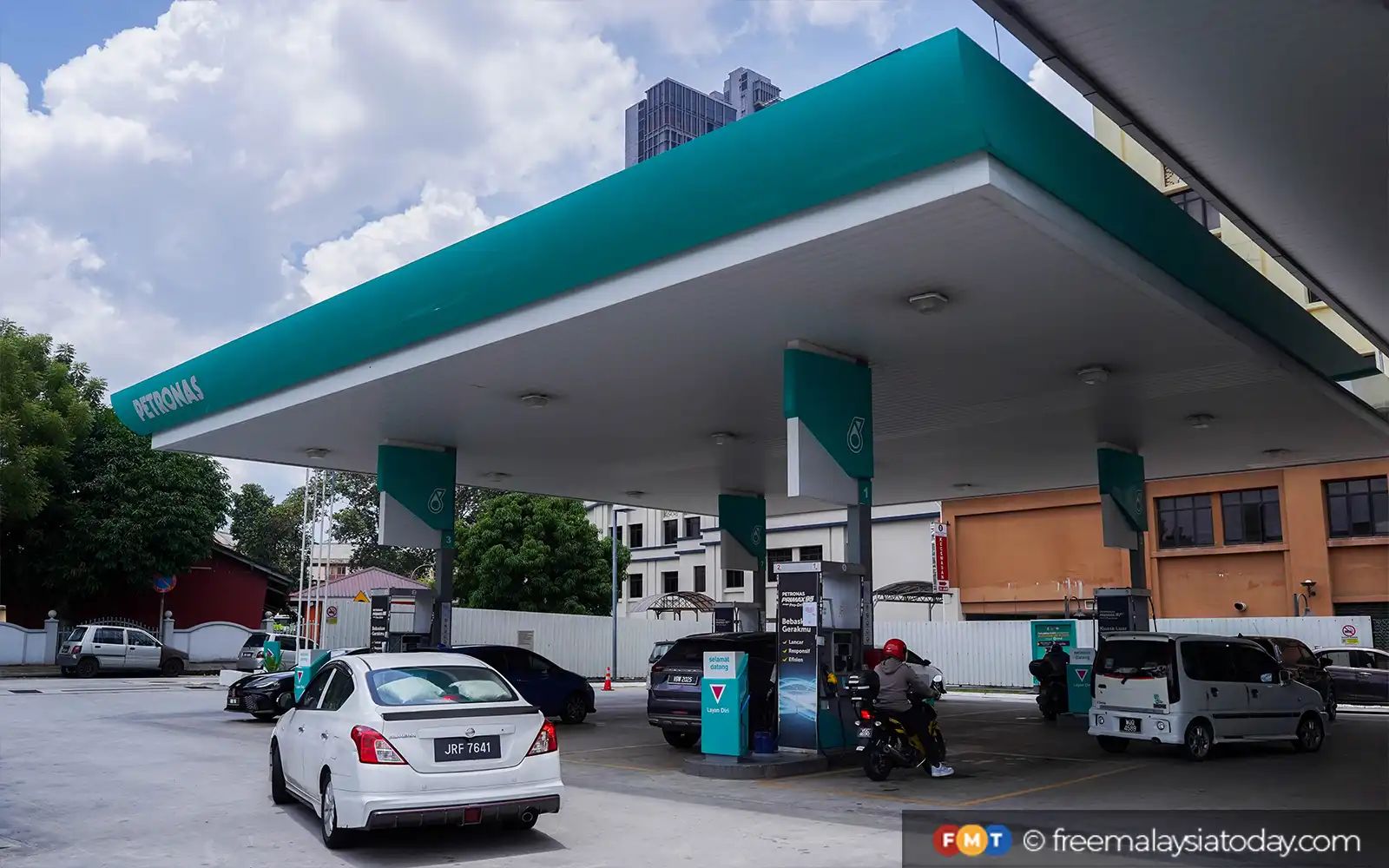
Samirul said the role of national oil and gas company Petronas has also evolved.
“In 2022, Petronas benefitted from extraordinary profit windfalls, enabling the government to draw higher dividends and absorb fiscal pressures without immediate consolidation,” he said.
“Today, the situation has shifted. Petronas is not merely a revenue source, it has become a stabilising agent of last resort, absorbing significant costs to ensure continuity of domestic supply.”
According to Samirul, estimates suggest that Petronas may be absorbing about RM650 million per month to secure fuel supply under current conditions.
Revenue diversification and hard choices
Samirul said Malaysia’s fiscal structure requires broader reforms beyond immediate spending cuts.
“Malaysia’s fiscal structure has long been characterised by a relatively narrow tax base and a degree of dependence on commodity-related revenues.
“Diversification of revenue sources is not an opportunistic response to crisis, it is a structural necessity,” he said.
He said policy debate should be framed around managing adjustment rather than avoiding it.
“The choice is not between austerity and generosity. It is between managed adjustment and unmanaged crisis,” he said.
Regional context
Malaysia’s measures come amid moves by other countries in the region to adopt more aggressive responses to energy disruptions.
Thailand has introduced energy-saving directives for civil servants, with Vietnam pursuing similar measures.
Indonesia is grappling with billions in additional subsidy costs and has moved to restrict access to subsidised fuel.
The Philippines has declared a national energy emergency, introducing measures such as a shorter workweek and direct intervention in energy markets amid tightening supply conditions.
Preserving fiscal space
Samirul said policymakers must act ahead of the curve as the effects of the crisis are expected to spread beyond energy.
“Fiscal buffers, once depleted, cannot be rebuilt quickly. Prudence today is the price of resilience tomorrow.
“In moments of uncertainty, prudence is not panic, it is the discipline that prevents crisis from becoming collapse,” he said.