
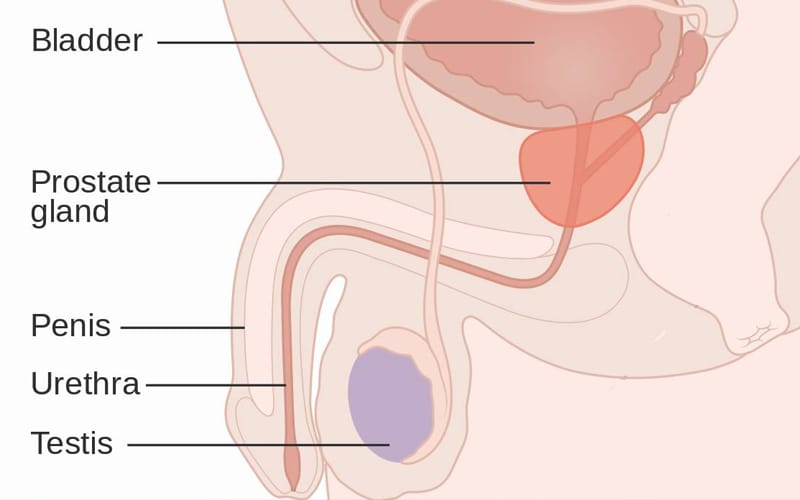
The prostate is a walnut-sized gland in men, located just in front of the rectum. It surrounds the urethra and produces fluid that contains sperm during ejaculation.
In 2019, Edwin (not his real name) was diagnosed with benign prostatic hyperplasia (BPH), commonly known as an enlarged prostate.
More than half of men aged 60 years or older have the condition. Although BPH is not cancerous, the excess tissue can cause problems when it interferes with normal urinary flow.
Edwin had had problems urinating for some time. He knew he needed treatment but didn’t want to have surgery at his age.
So his family doctor prescribed medication, which worked well for the first 18 months but stopped being effective after two years. He was then referred to a urologist, who recommended a “trans urethral resection of prostate” to remove the enlarged tissue.
The procedure, which was carried out in March last year and took under an hour, involved a resectoscope inserted through the urethra to remove the excess tissue.
It was a success. About six weeks later, Edwin took his family for a vacation as he was so happy. Follow-up tests indicated his urinary flow was excellent.
Signs and symptoms
As men age, it is common for their prostate to become enlarged. Many doctors are able to manage this condition using medication in the early stages. It’s not serious but it can be very uncomfortable and inconvenient.
While the exact causes are still undetermined, age plays a major role. About 90% of men over age 80 suffer from an enlarged prostate. While this doesn’t mean one can’t develop an enlarged prostate at a younger age, the likelihood isn’t as high.
The most common symptoms are:
- Frequent or urgent urination
- Trouble emptying the bladder completely
- Nocturia, or increased urination at night
- Inability or difficulty in starting urination
- Weak urine stream
- Dribbling after urination
- Urinary tract infection
- Blood in the urine
Edwin says to be careful as there are several other conditions like kidney stones or cancer that can mimic these symptoms, which is why it is important to seek medical advice as soon as one notices anything abnormal.

Diagnosing an enlarged prostate
The physician will run a few tests, and if it is indeed an enlarged prostate, the doctor will come up with a treatment plan based on the patient’s age, symptoms and other physical factors.
Medication is usually the first course of action, but if the enlarged prostate is more severe, the patient may require a minimally invasive outpatient procedure or even a surgical procedure. The doctor will discuss all the options in detail.
Edwin says he would definitely recommend the procedure to other men his age. If the doctor suggests it, please do the surgery, he urges.
The most important thing is not to wait to seek treatment. Men above 60 must take their urological health very seriously, and seniors do not have to live with discomfort. Edwin is a big believer in early intervention and detection.
TELEME Healing Life Stories is a collection of inspirational stories of how ordinary people triumph over their health conditions and recover to lead a healthier life after that. Feel free to email [email protected] to share your story.
Click here to read more health educational articles or download the app to chat with a health practitioner.