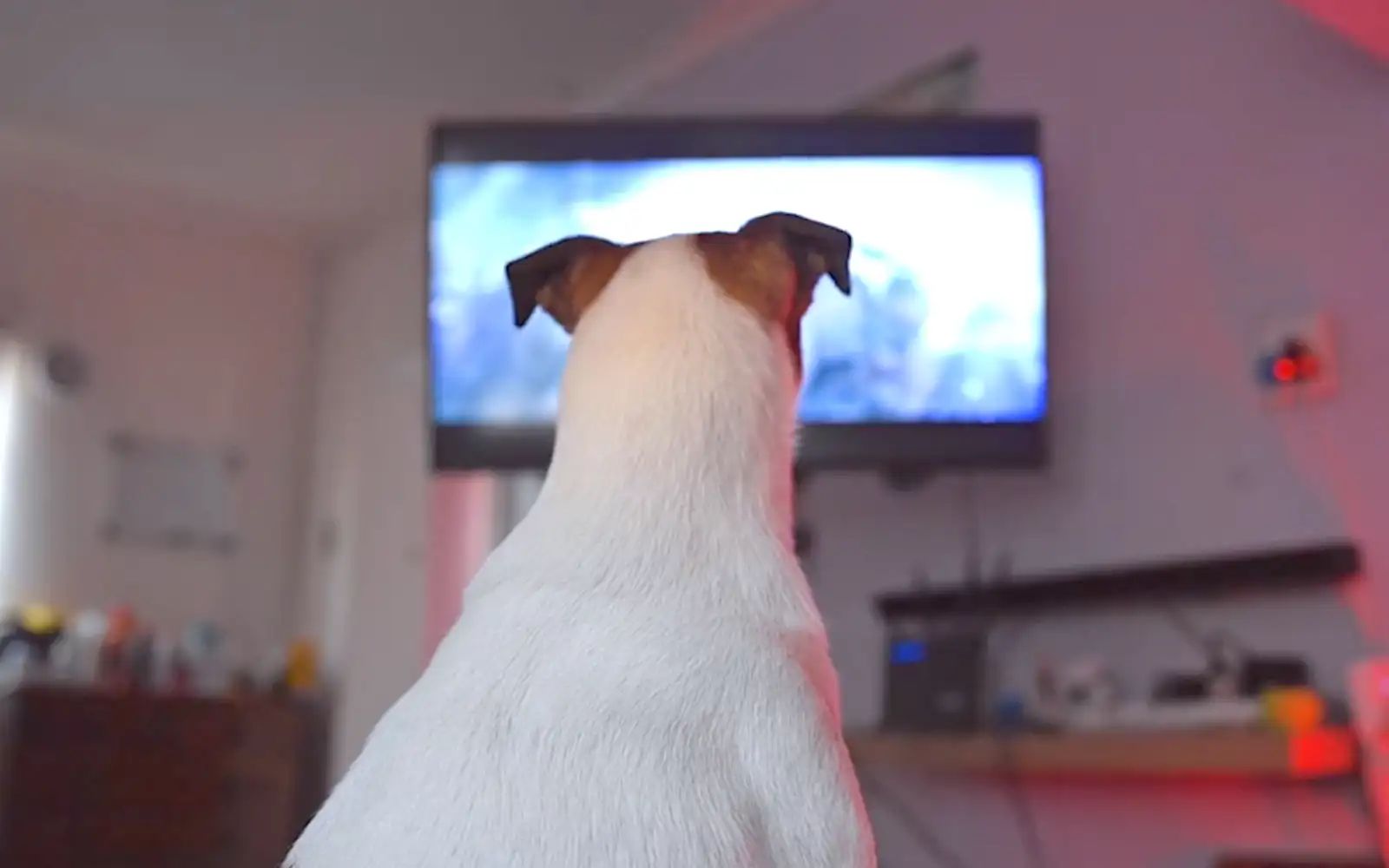
“There must be something on YouTube for Luna,” he said – a thought would eventually lead to Siesta Dog TV, a YouTube channel filled with slow, looping videos designed for canine eyes and ears.
Some run for hours. Animated dogs wander through city streets, sit by ponds, or simply exist in calm, repetitive scenes, all set to soft, almost hypnotic music.
The colours lean heavily towards blues, which dogs can see more clearly, and the pacing is deliberate, avoiding anything too sharp or startling.
Carano is not alone. According to the BBC, a growing number of channels now cater to dogs left at home, with names like Four Paws TV, Cartoon Dog Music, and Puppy Dreamscape offering everything from playful clips to near-ambient visual loops.
Making such material has become easier thanks to artificial intelligence, the BBC report notes. After all, as Carano puts it: “Dogs don’t care if what they’re seeing is AI.”
The idea taps into something many pet owners already feel. “People are more closely attached to their dogs than ever before,” says Nicholas Dodman of the US-based Center for Canine Behavior Studies.
“They treat them like children and worry about leaving them alone. And there’s more awareness these days about separation anxiety affecting dogs.”
These concerns have helped turn what might once have seemed like a novelty into a small but growing niche.
Ah, but….
There is an obvious question: are dogs actually watching any of this?
Researchers at the Canine Behaviour Centre at Queen’s University Belfast observed 50 dogs in a shelter and found that, on average, they spent just over 10% of their time looking directly at TV screens. Most quickly lost interest, suggesting that long, attentive viewing is not typical.
Ilyena Hirskyj-Douglas, an assistant professor at the University of Glasgow, has seen something similar. Dogs, she found, tend to engage in short bursts, glancing at movement before turning away again, rather than settling in for extended viewing.
And yet, that is not the whole picture. A study from Auburn University in Alabama suggests that canines can experience a “meaningful, object-filled world” when watching television, particularly when the content features animals or motion.
Another study out of Purdue University found that dogs in kennel environments showed fewer signs of stress, such as pacing, when video content was playing in the background.
Taken together, the research points to something more subtle than simple viewing. Dogs may not sit and watch TV the way people do, but they do notice movement, sound and changes in their environment.
A flicker on the screen, a bark, or the rustle of leaves may be enough to draw their attention, even briefly. And for some, that may be all it takes.
Experts are nevertheless careful to stress that screens are no substitute for real interaction: exercise, play and social contact remain far more important for a dog’s wellbeing.
But in a quiet home, a bit of background motion or sound may offer a small form of stimulation for a canine companion who has to spend a few seemingly unending hours without their beloved humans.