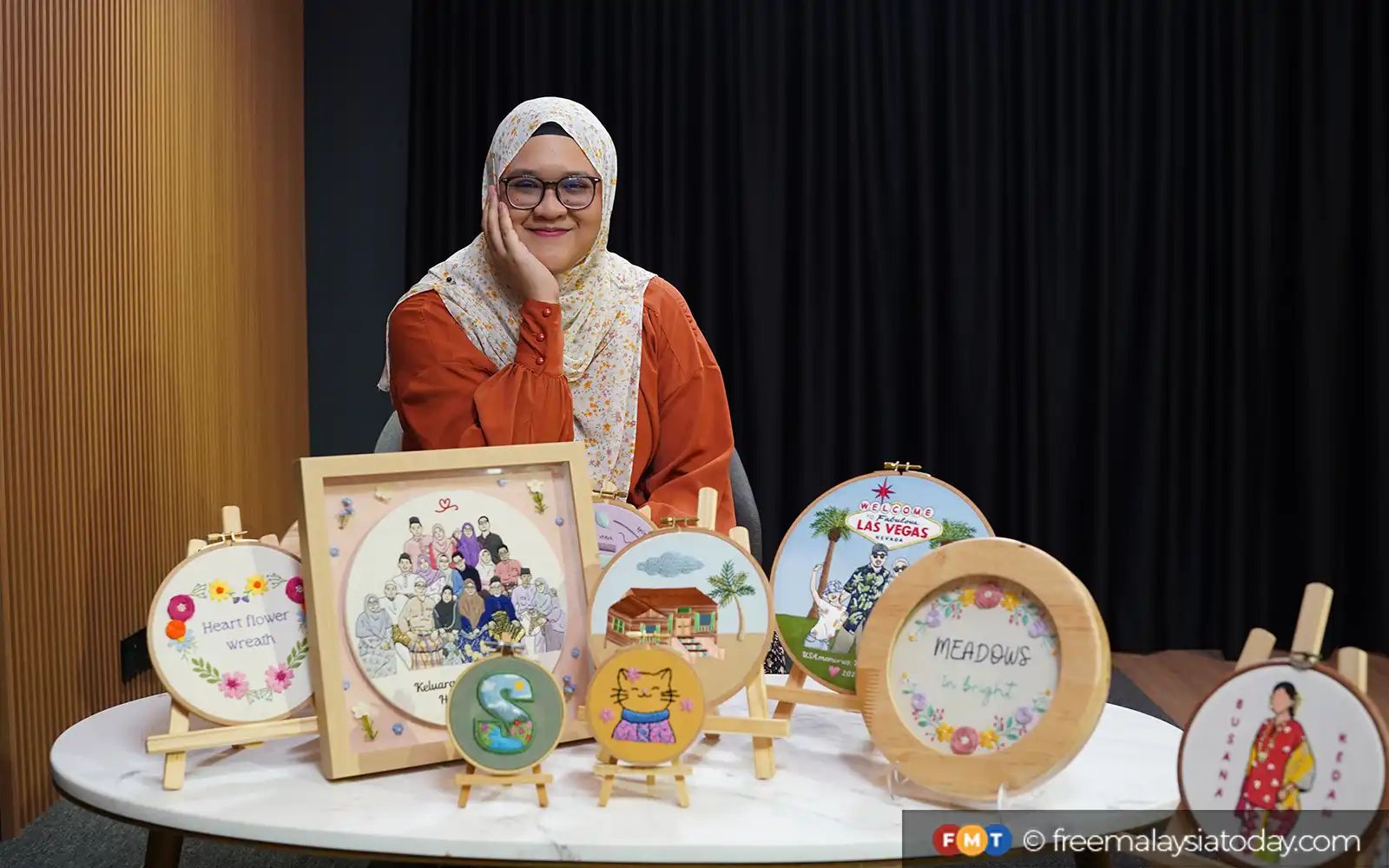
The 32-year-old moved away from a stable career path during the pandemic to build a life as a hand embroidery artist.
A master’s graduate in nanotechnology and biomedicine from Universiti Teknologi Malaysia, Siti said her interest in embroidery began during the Movement Control Order, when the world was grappling with Covid-19 and she was struggling with mounting mental pressure.
“During lockdown, my mind was very noisy, like there were voices shouting in my head. I had all this energy but nothing to do, so my thoughts wandered – sometimes to places they shouldn’t,” she told FMT.
Embroidery became a source of calm. “When I started stitching, I noticed the noise quietened. Maybe because my mind finally had something to focus on – where to place the needle, how to make it neat. There was no space for unnecessary thoughts.”
She shared her first embroidered piece on social media and, within a month, began receiving requests for custom designs. But she faced challenges early on, including exhaustion and lack of profit.
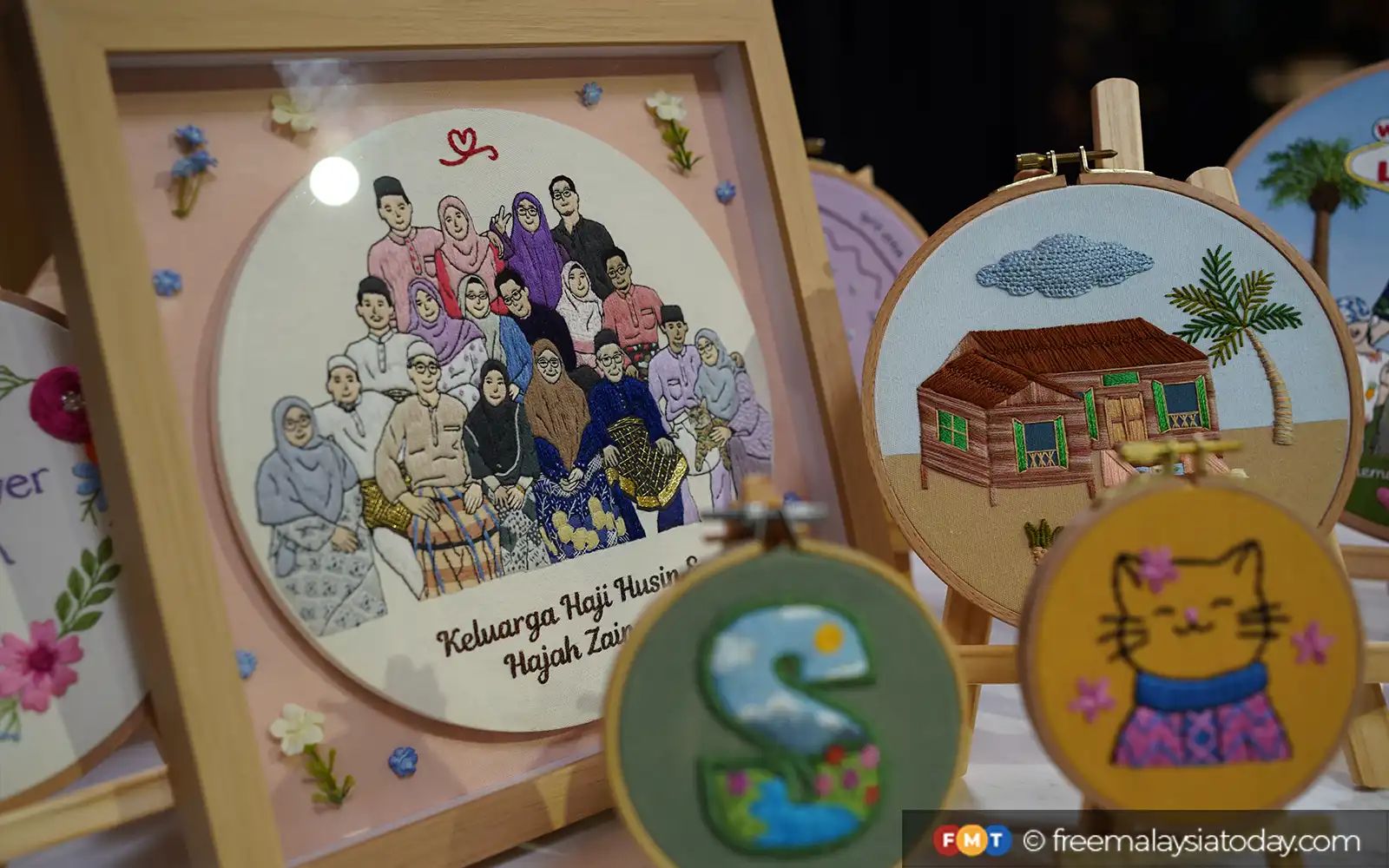
“I initially priced my work too low, so I had a lot of orders but made very little. Eventually, I got burnt out,” she recalled.
Realising she had to change her strategy, Siti raised her prices and stopped relying solely on commissions. Instead, she began holding embroidery classes and selling embroidery kits.
The move opened up new income streams while easing her workload, allowing her to continue creating without becoming overwhelmed.
Siti has since taught hundreds of students across the country, building a growing community of embroidery enthusiasts.
Prices for her embroidered pieces start at around RM300 and can go “into the thousands”, depending on the design. “There’s definitely demand,” said the second of three siblings.
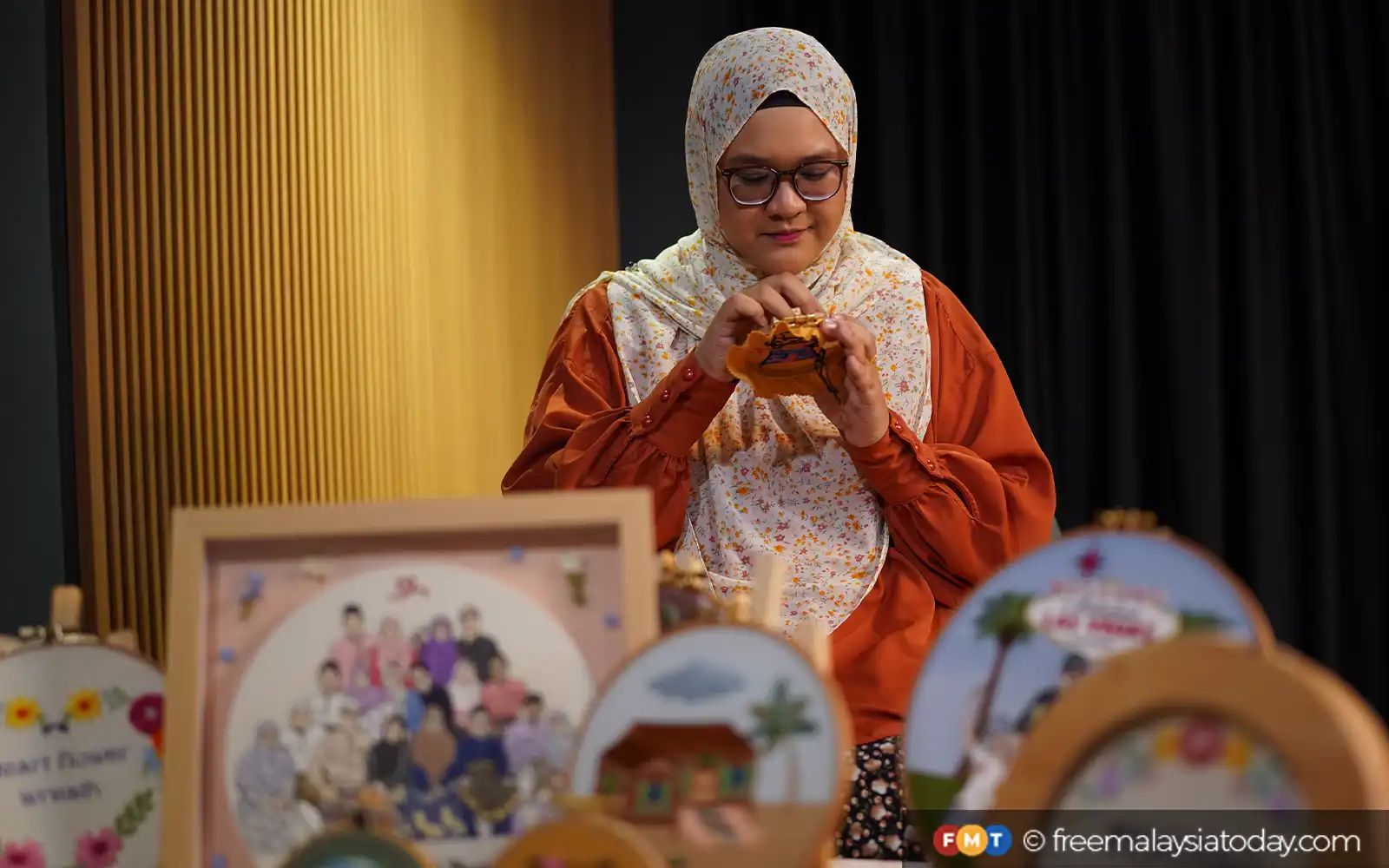
Still, misconceptions persist: many assume it is simple work, when in reality, a single piece can take days, weeks, or even months to complete.
“Hand embroidery in Malaysia is still undervalued compared to other art forms. When the price is high, people question why. But the process is incredibly detailed and time-consuming,” Siti noted.
“If people are willing to pay thousands for paintings, why not embroidery? It’s just as complex.”
To shift perceptions, Siti actively shares her process through live sessions on social media, giving viewers a closer look at the effort behind each piece.
“When I go live, people start to understand why it costs so much. It looks fast because I use time-lapse videos. But really, it takes a very long time and requires a lot of patience,” she said with a laugh.
While her career may not have ended with a lab coat, Siti has found fulfilment in her chosen path. Her hope now is that hand embroidery will be deemed on par with other art forms, and valued for the time, care and precision it demands.