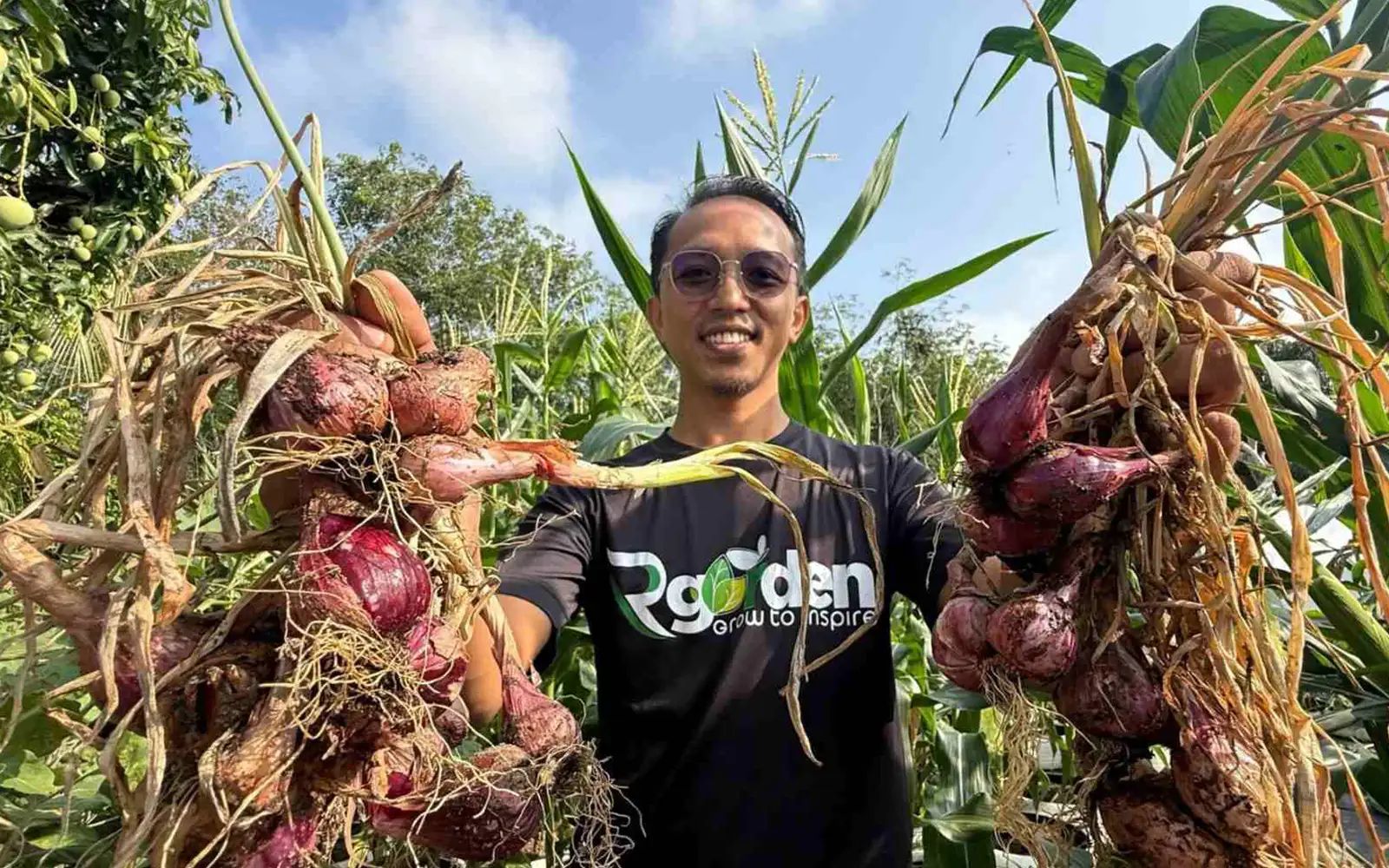
“It was initially for my children, so they could get to know the plants and insects in the garden,” the 41-year-old private-sector worker told Bernama.
On a 30-sq-m plot, Khaironnie manages around 1,200 hydroponic planting holes, growing a range of leafy greens. Each month, the garden produces between 100kg and 300kg of vegetables – more than enough for his family and, increasingly, for others as well.
The extra harvest does not go to waste: it finds its way to neighbours and villagers, either shared or sold at affordable prices.
Khaironnie also grows crops such as eggplant, okra and corn in soil, using about 150 repurposed tyres as planting pots. The approach reflects his wider philosophy of using whatever is available and keeping things as natural as possible.
“I use organic methods wherever I can,” he said, highlighting wood vinegar for pest control, and planting flowers to attract insects that naturally keep pests in check.
And it’s not just vegetables. Nearby, around 50 Lohmann Brown hens produce between 40 and 50 eggs a day, alongside another 50 free-range chickens raised for meat.
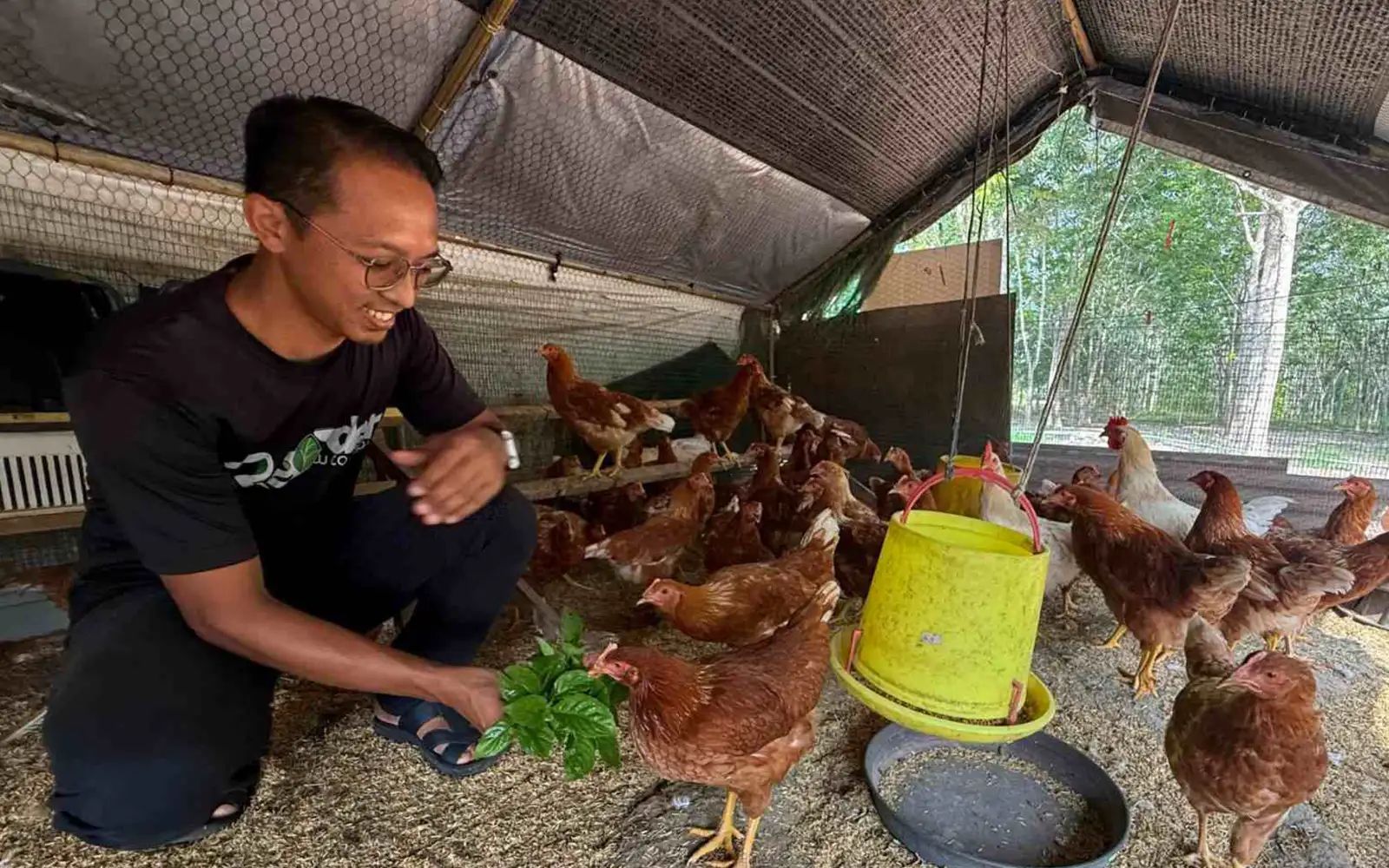
Even waste is carefully managed. Rice husks used in the chicken coop are replaced regularly, then composted for fertiliser, ensuring everything feeds back into the garden.
Additionally, surplus vegetables are sold at between RM3 and RM5 per pack, or bundled as a mix of four types for RM10. Fresh eggs are priced according to market rates, with proceeds reinvested into seeds, supplies and feed.
More recently, Khaironnie has also begun sharing his journey online. He now runs small classes to guide others interested in growing their own food, whether through hydroponics or backyard chicken-rearing.
For many, the appeal is not just about fresh produce – it is about having more control over what they eat, lowering daily costs, and reconnecting with nature in an increasingly fast-paced world.