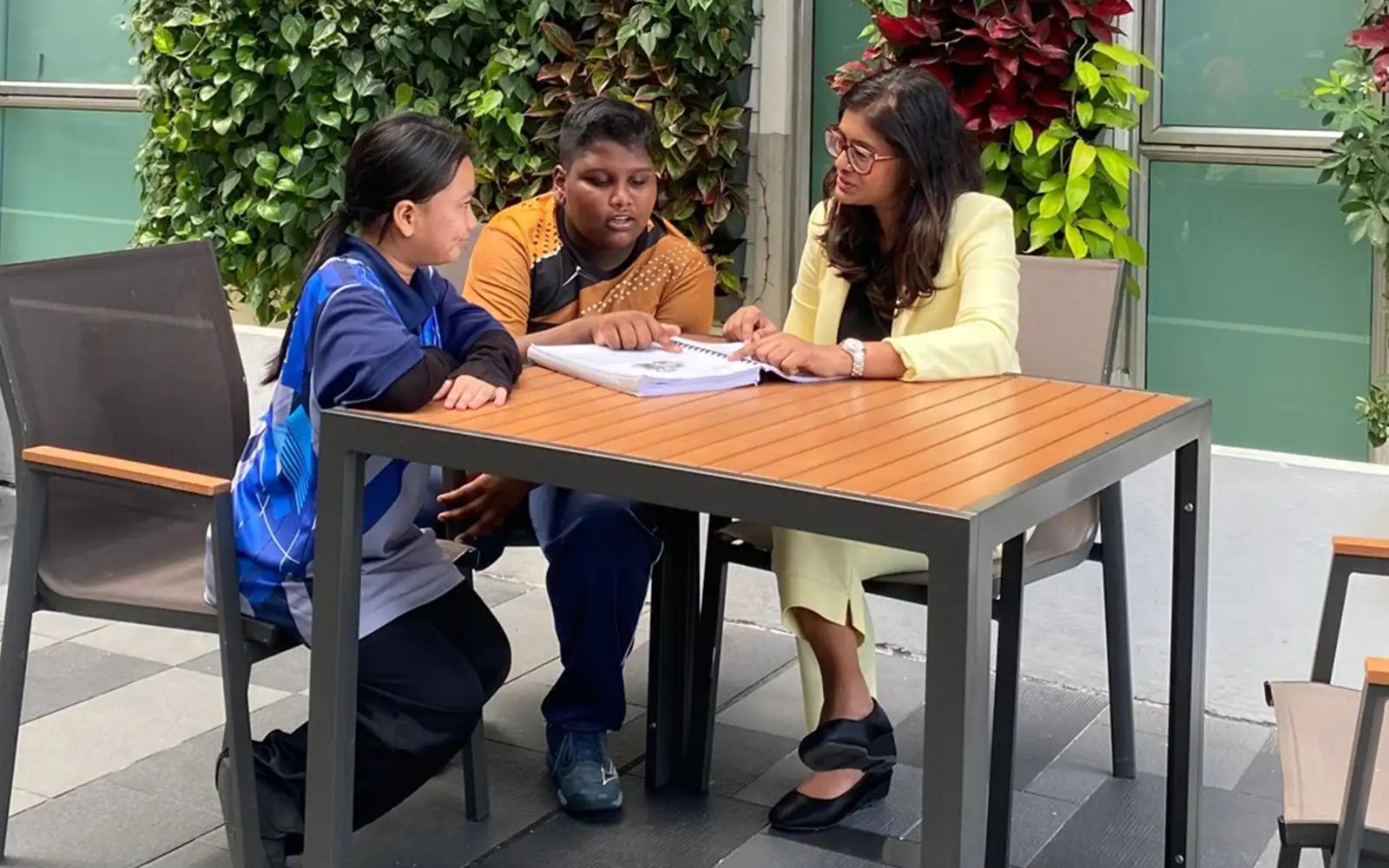
All this effort just so Abigayle could attend her reading lesson. There was no guarantee it would work. But they showed up anyway, and over time, Abigayale began to engage with the text. It was a long process, then much to the delight of her mother and Projek BacaBaca’s reading coach, the child began to read with confidence.
“It was a reminder that access is not simply about being enrolled in school or having a device. It is about whether a child can consistently engage in learning.
“And when that engagement is supported, even in difficult conditions, progress is possible,” Hema Letchamanan, project lead of Projek BacaBaca, shared with FMT Lifestyle.
And increasingly, stories like Abigayle’s are no longer rare.
Last Saturday, 100 students from the 2025 cohort of Projek BacaBaca gathered with their reading coaches, teachers, and partners, not just to celebrate better reading scores, but something deeper: discipline, confidence, and a genuine love for learning.
The five schools involved were SK Bandar Sunway, SJKT Ladang Effingham, SJKT Vivekananda, SJKT Ladang Sungai Choh and SJKT Ladang Batu Ampat.
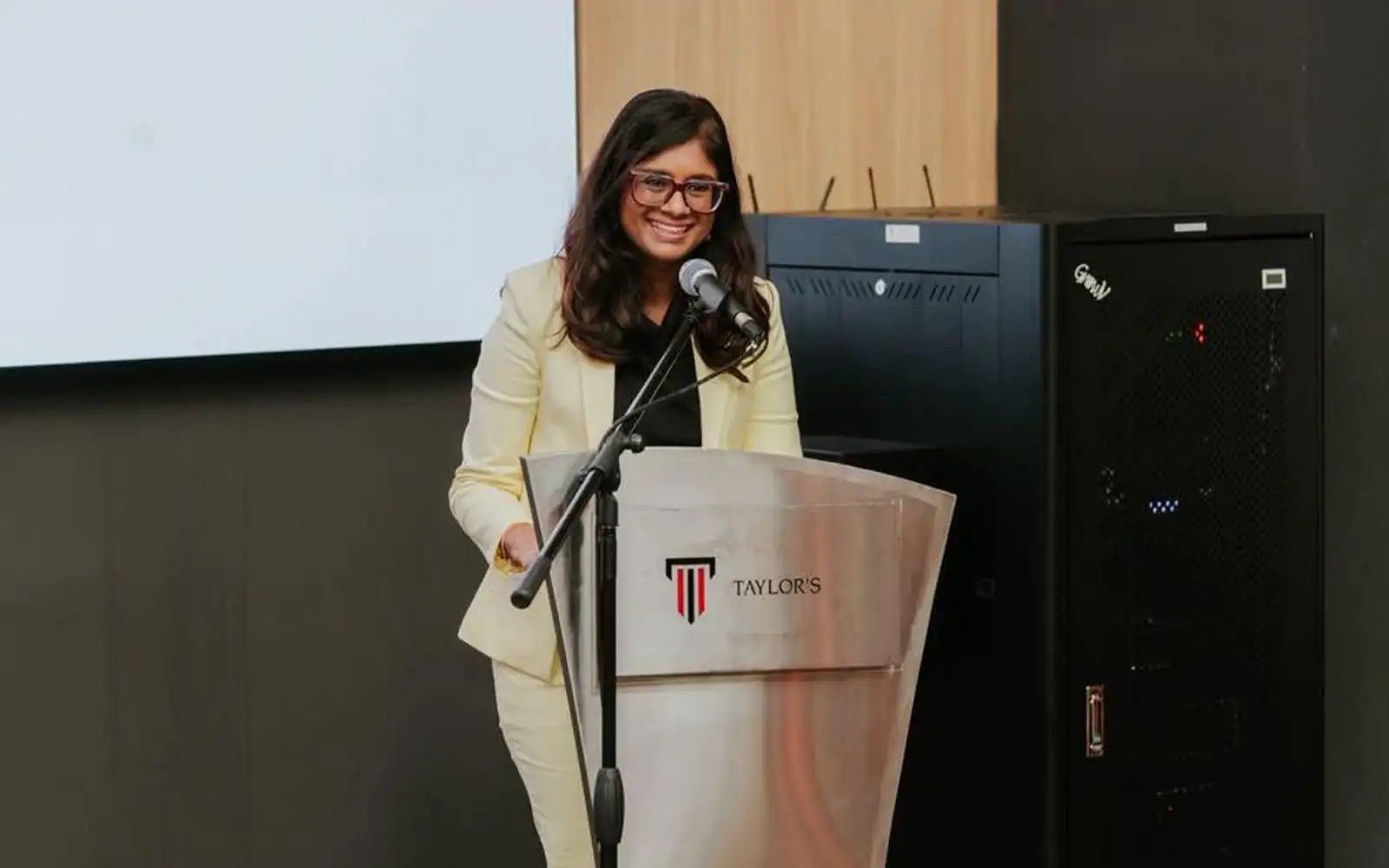
Six years in, the weekly literacy intervention programme developed by Taylor’s University – under its Impact Labs initiative – has reached over 700 children across Malaysia, from low-income flats in Kuala Lumpur and Selangor to rural communities in Sabah and Orang Asli settlements.
Sivashankari, mother of Tarun Arul, 10, said her son once struggled with reading. This affected his confidence in school. However, he reads much better now with Projek BacaBaca’s help.
“Not only did I see the improvement in his reading, I also saw the joy on his face when he realised he could recognise words and understand sentences in both languages,” Sivashankari enthused.
She said Tarun’s reading coach was a big help, a sentiment echoed by Yap Mei Foong, mother of Kayden Goh, eight. “Her patience in guiding him helped his confidence, knowing that even if he utters it wrongly, she will correct him gently,” said Yap.
For Hema, this journey began not with a single turning point, but a pattern she could no longer ignore.
“It was a gradual realisation,” she said. “These were children who were attending school but needed more structured, individual attention in reading than the system could realistically provide.”
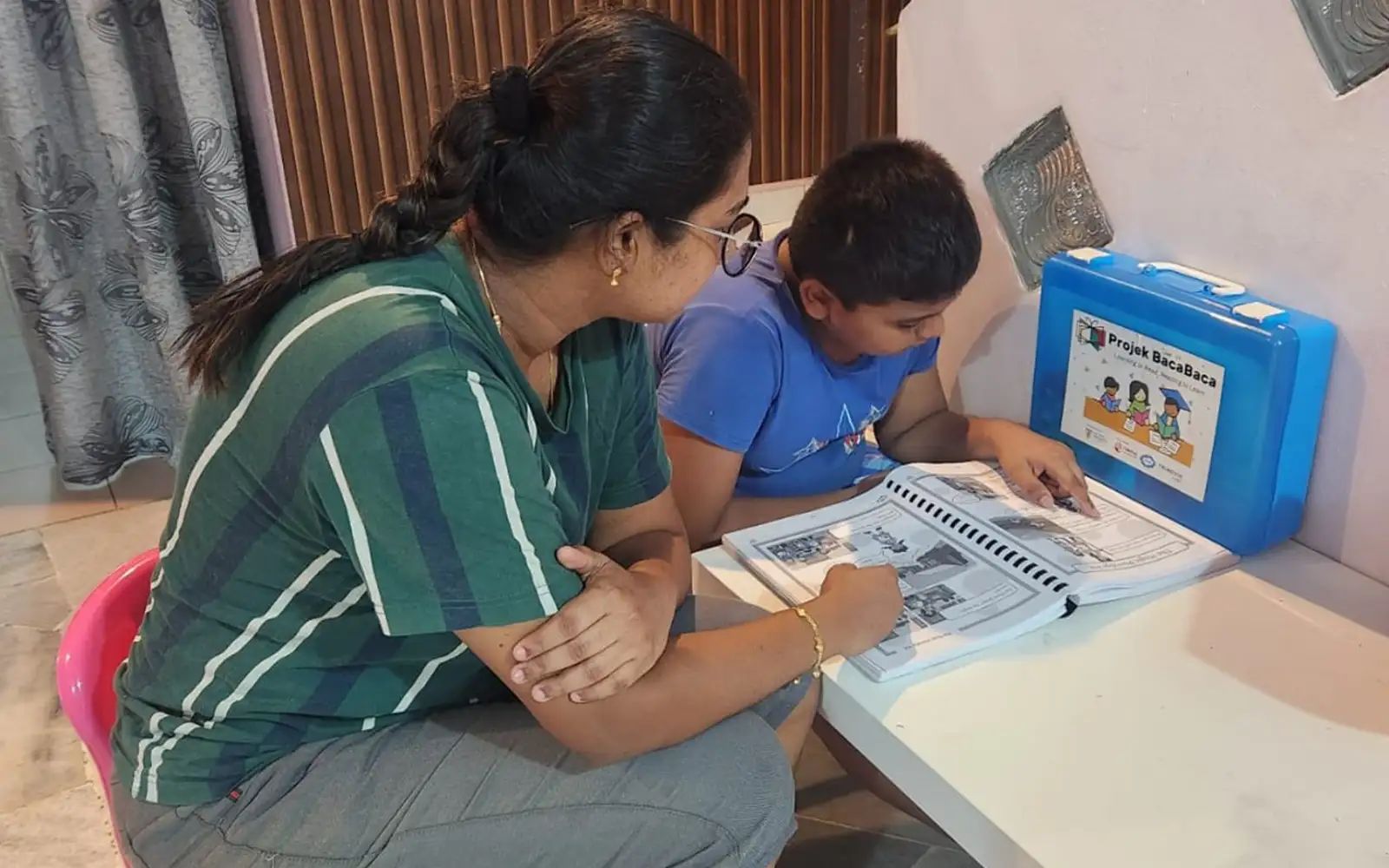
That gap – between being in school and actually learning – is what Projek BacaBaca addresses. It focuses on children aged six to nine, a critical stage when reading becomes the foundation for all learning.
“If a child does not develop confidence and fluency in reading during this stage, the gap tends to widen over time,” Hema explained.
Instead of conventional tuition, the programme offers structured reading intervention through one-on-one or small-group sessions. Each child is met at their level, guided through decoding, fluency, and comprehension at a pace that works for them.
“What makes the difference is not just the content, but the consistency,” Hema stressed. That consistency is powered by volunteers – many with no prior teaching experience – who step in as reading coaches. With training and support, they become steady figures in a child’s learning journey.
“We ask our reading coaches to be their student’s champion,” Hema said. “To believe in the child even when the child is hesitant, unsure, or unable to read.”
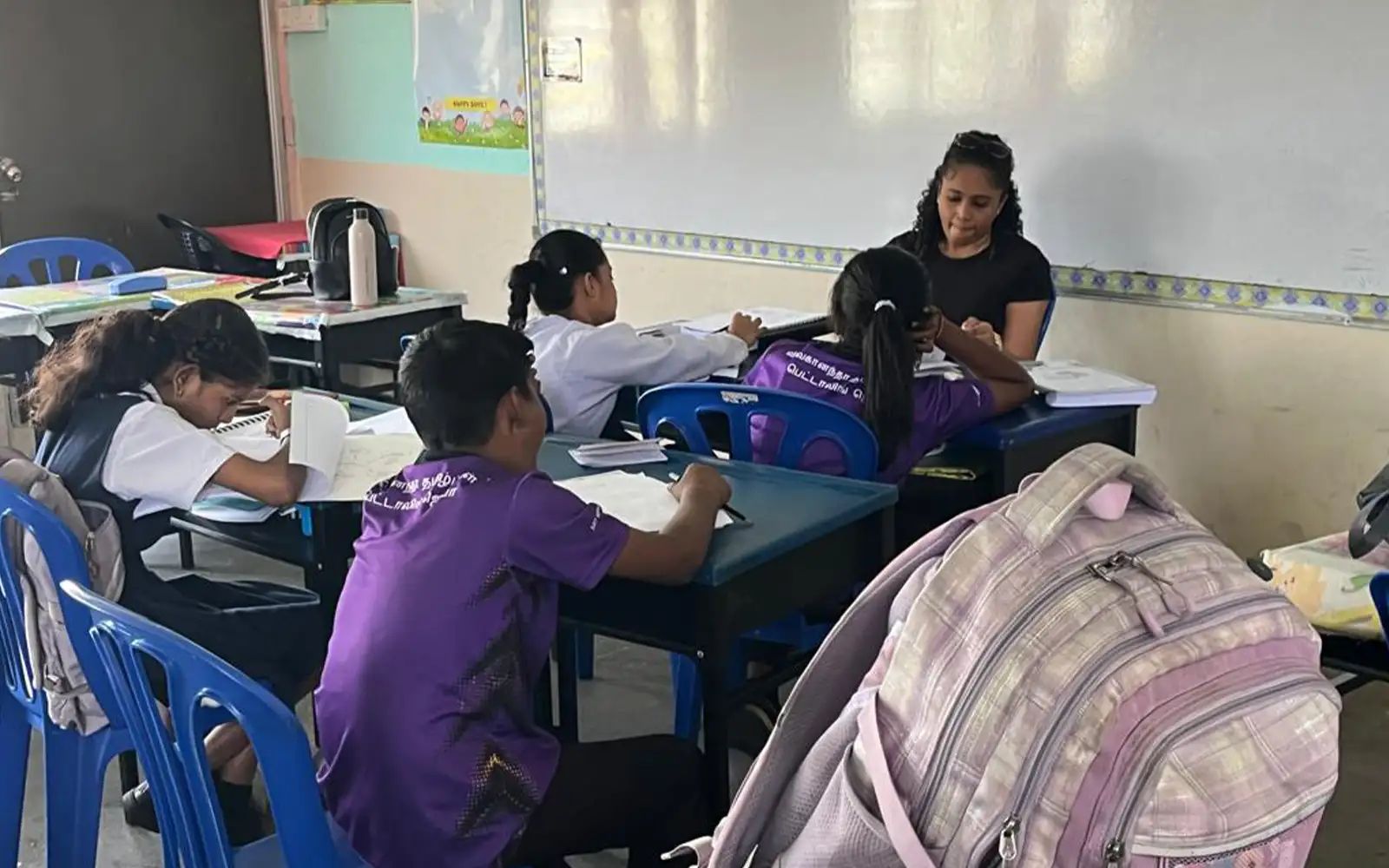
Mahalaksmi Mariapan, a reading coach, shared that one of the most rewarding outcomes with the children has been “seeing them take ownership of their learning. They are able to read together and confidently correct one another, reflecting both growth in confidence and collaboration”.
Ultimately, Projek BacaBaca shows that targeted reading support should be a normal, essential part of early learning. “It is not about fixing a deficit, but about ensuring that every child has the foundation they need to engage fully with the curriculum,” Hema pointed out.
Looking ahead, Projek BacaBaca plans to expand to more states including Perak, Penang, and Sabah, reaching more underserved students and using better tracking and technology to support learning beyond sessions.
“The intention has always been to build a model that is adaptable across different contexts, while maintaining a clear and consistent focus on reading development,” Hema concluded.
Follow Projek BacaBaca on Instagram.