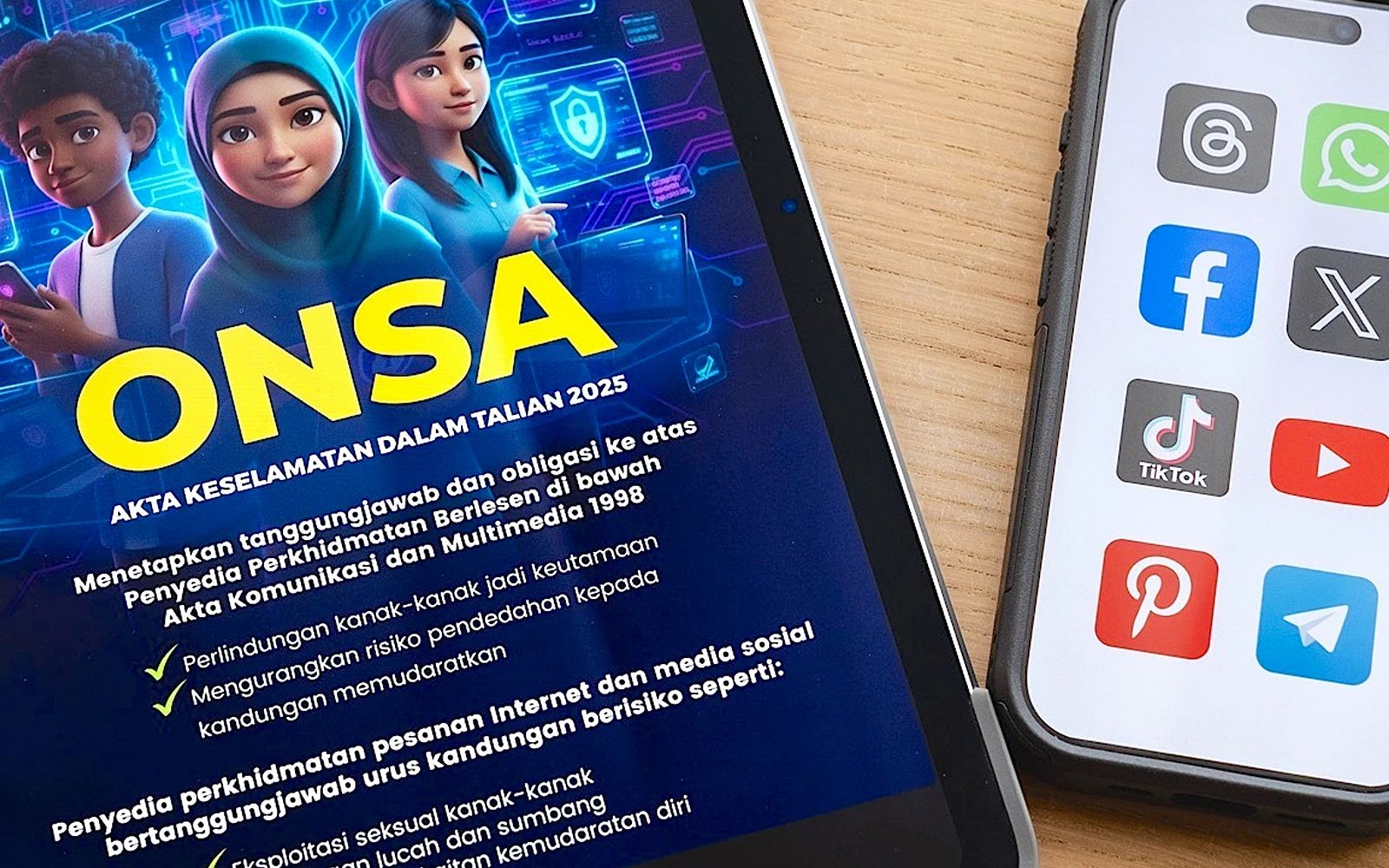
Concern over what young people are exposed to has prompted the introduction of the Online Safety Act 2025 (Onsa), which came into force on Jan 1. The law aims to create a safer digital environment by placing clearer responsibilities on online platform providers, particularly where children are concerned.
Under Onsa, platforms are expected not only to remove harmful content but to detect risks earlier and act more quickly – a shift from reacting after damage is done.
Malaysian Cyber Consumer Association president Siraj Jalil said the act strengthens protection for vulnerable users, particularly children and teens, by “providing a stronger legal framework to curb exposure to sexual exploitation content, cyber harassment, image manipulation and extremist material”.
Unlike earlier laws that focused mainly on post-offence action, Siraj said Onsa introduces more proactive guidelines to deal with fast-spreading harmful content and repeated online abuse.
He added that the law is especially relevant in an era of artificial intelligence, where fake or manipulative content can be produced and shared rapidly.
“This approach reflects a shift from merely punishing offenders to building a safer digital system as a whole,” he said, while noting that enforcement and platform compliance remain key challenges.

Citing a recent case involving the misuse of AI on X, where images of women and children were manipulated, Siraj said it clearly illustrated a digital governance gap that must be addressed urgently.
“This issue is not merely an ethical violation but a serious threat to digital safety, individual dignity and social well-being. It requires firm and consistent action by the authorities to ensure platform providers comply with established laws.”
Psychological effects
Meanwhile, child psychologist Noor Aishah Rosli said children are particularly vulnerable online because they lack the ability to assess content critically.
“Children exposed to violent or aggressive videos may experience anxiety, excessive fear or worry, nightmares and heightened panic,” she said. Such exposure can affect sleep, behaviour and emotional security.
She said children may also struggle to distinguish staged or exaggerated online content from reality, which can lead to low self-esteem and unhealthy comparisons.

Aishah believes the act can reduce these risks by limiting access to unsuitable material, noting: “Onsa can help regulate algorithms so that inappropriate content is not easily accessible to underage users.”
She nevertheless highlighted that age-based content filtering remains essential, and urged parents to stay involved in their children’s digital lives.
Elsewhere, Universiti Utara Malaysia academic Mohd Khairie Ahmad said while the law provides a strong framework, its success depends on consistent enforcement in a digital space that crosses national borders.
He stressed that public awareness is also important to ensure the act is understood as a safety measure rather than a restriction on online freedom.
Ultimately, as children continue to grow up online, Onsa seeks to strike a balance between protection and participation – making the digital world safer without shutting it down.