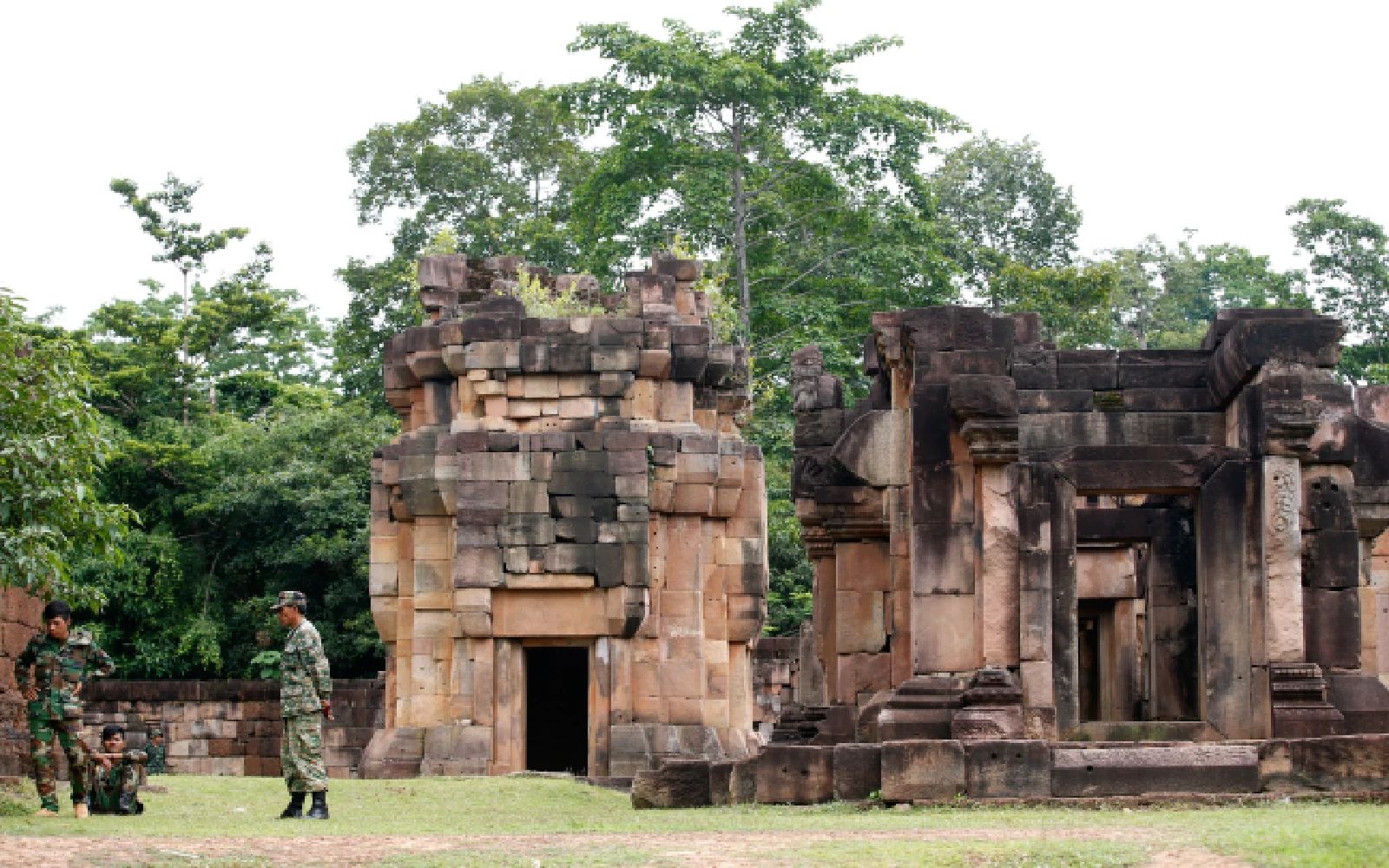
The two Southeast Asian nations have disputed the demarcation of their 800-kilometre (500-mile) border and repeatedly fought over a smattering of centuries-old temple sites for decades, a legacy of the French colonial era.
The long-standing conflict erupted into fighting in July and December that killed dozens of people and left some temples claimed by both sides under Thai control.
Cambodia’s culture ministry on Wednesday called on Thailand to withdraw its “unlawful registration” of the temples of Tamone, Ta Krabey and K’nar, and other archaeological sites, located on their disputed border.
In Thailand, the three temples are known as Ta Muen, Ta Kwai and Nong Khana, among nine sites that Thailand added to its official registry for “the sake of clarity in protecting ancient monuments”, an announcement in the royal gazette said on Monday.
Cambodia’s culture ministry said it “considers this registration an unlawful attempt to create an artificial legal appearance over cultural sites situated within the sovereign territory of the Kingdom of Cambodia”, according to a statement.
Before five days of border clashes in July, the disputed temples of Ta Krabey and Tamone hosted both Cambodian and Thai troops, while K’nar temple was controlled by Cambodians until December, when Thai forces gained control of all three sites.
Last month, Thai officials, soldiers and monks held a Buddhist ceremony at Ta Krabey — also known as Ta Kwai — drawing a rebuke from Cambodia over its neighbour’s “continued unlawful presence” at the temple site.
Thai forces captured several areas in border provinces last year, territory that both sides claim.
Cambodia has repeatedly demanded their withdrawal and slammed Thailand over damage to several heritage temples sustained during the fighting.
The two countries signed a fragile ceasefire agreement in late December, but tensions remain, with both sides trading accusations of truce violations.