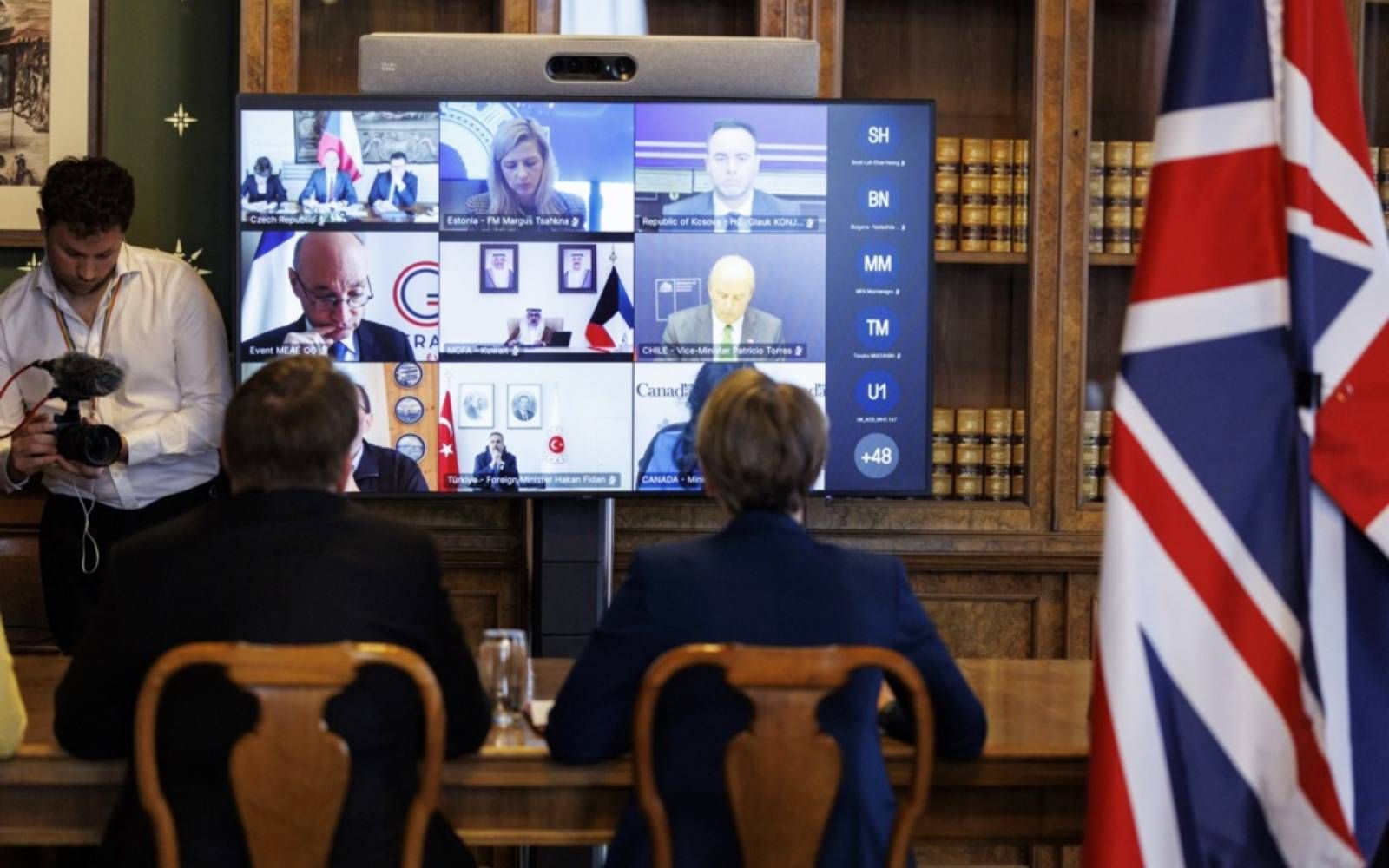
The UK convened nations from Europe, the Middle East and Asia, as well as Australia and Canada, to consider diplomatic outreach to Tehran and potential sanctions if it did not agree to unblock the critical shipping lane for global energy supplies.
The virtual meeting appeared intended to demonstrate the shared position of dozens of American allies that he should not walk away from the conflict without finding a solution for the strait, as the president has repeatedly threatened to do.
Attendees fear that Trump will wind up his operation in Iran without a plan to reopen the waterway, leaving it to them to deal with the fallout.
The international community was clear the US needed to include a solution for Hormuz in ceasefire talks with Iran, people familiar with the discussions said. Still, the virtual meeting showed the coalition of countries deem it necessary to begin preparations for having to reopen the strait without the US.
Trump has strongly criticised North Atlantic Treaty Organization (Nato) countries for being unwilling to deploy their own militaries to the waterway – going as far as to threaten leaving the alliance.
Thursday’s meeting also seemed to be an attempt by Britain, France and other European countries who’ve been lashed by Trump recently to show willingness to contribute to a solution for Hormuz.
Among participants on the call, Japan called on each country to cooperate on establishing safe maritime corridors for all vessels and crew currently stuck in the Persian Gulf, according to a foreign ministry statement.
Japanese foreign minister Toshimitsu Motegi, who participated on the call, also “underscored the importance of each country making its utmost effort to ensure a stable energy supply,” according to the statement.
Military planners from the coalition of countries will meet next week to discuss how their naval assets could be deployed to help police and de-mine the strait after the fighting has stopped.
There is little appetite among the vast majority of the coalition to attempt to reopen the waterway by force because they don’t see that a viable solution and do not think the crisis can be resolved without the agreement of Iran.
Attendees saw the United Nations as an important part of diplomatic efforts to lobby Iran, pointing to work with Gulf partners on a push to return to freedom of navigation.
Attempts by Iran to introduce a toll regime would set an unhelpful precedent and there was broad support for free passage through the strait, the people familiar with the discussion said. Economic measures including sanctions were also discussed to ensure Iran isn’t able to continue profiting from the closure.