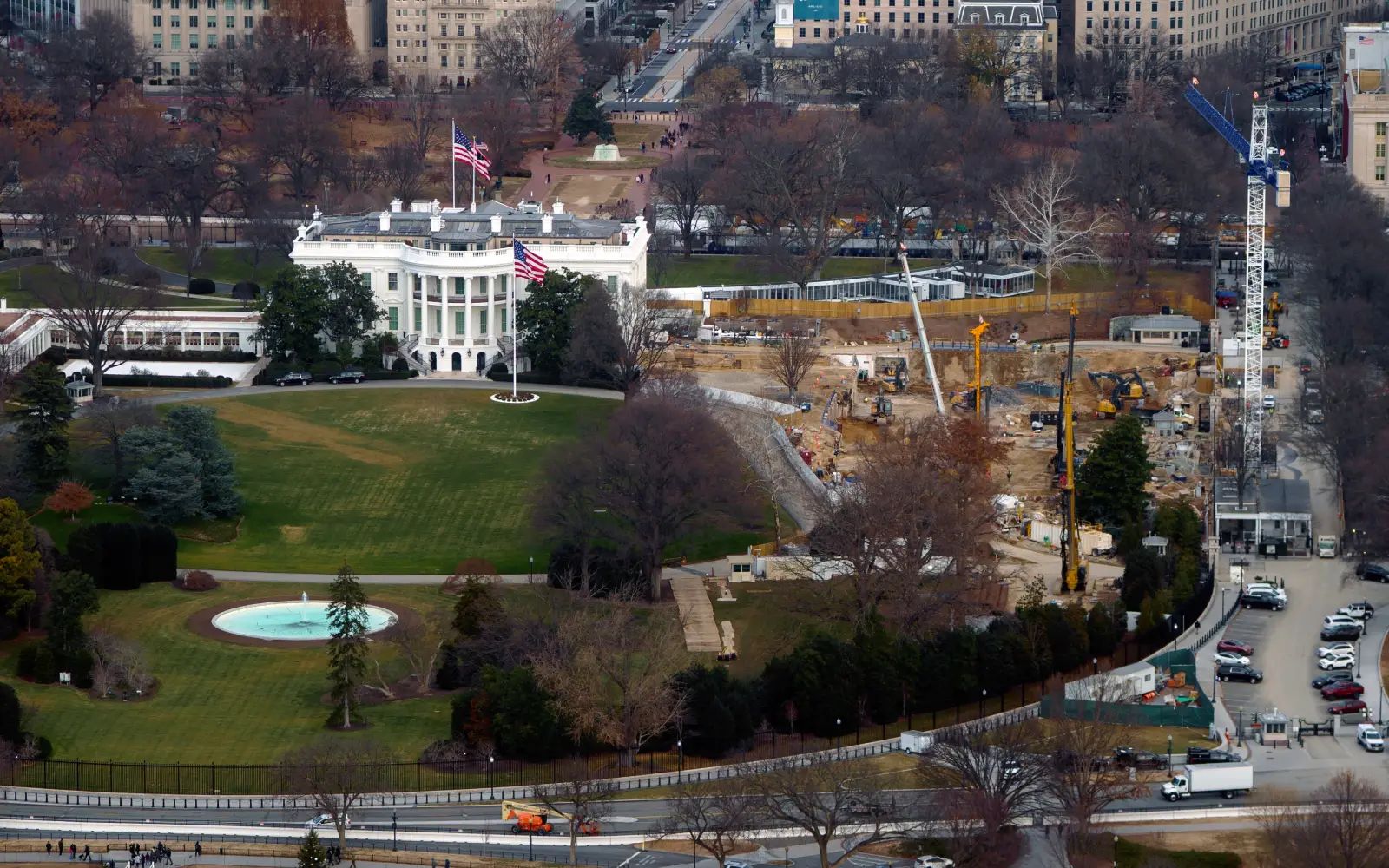
Trump razed the White House’s East Wing in October to make way for a US$400 million, 90,000-square-foot (8,400-square-metre) addition that he says will be privately financed.
The administration planned the neoclassical building’s ribbon-cutting for summer 2028 as part of the most extensive remaking of the US capital’s landscape in decades.
The National Capital Planning Commission said it would consider “approval of preliminary and final site and building plans” on March 5, according to a tentative meeting agenda posted online.
The commission is one of two federal bodies, along with the US Commission of Fine Arts, assigned a role in overseeing key DC-area building projects.
Neither group is expected to block or delay Trump’s plans. Trump picked several members of both groups, and his former personal lawyer Will Scharf chairs the National Capital Planning Commission.
But federal courts are scrutinising the project. A judge last month expressed scepticism about whether the administration had authority to proceed with construction after a demolition that Congress didn’t approve.
The National Trust for Historic Preservation sued in December, arguing that the project lacked the required approvals and environmental review.
In documents supporting its proposal and posted online by the commission, the Trump administration said it concluded that demolition of the East Wing was “the most effective solution to many longstanding issues affecting the White House” in light of the 120-year-old structure’s limitations, poor energy efficiency and limited accessibility for people with disabilities.
The White House’s disclosures were the most extensive description of the project to date, including illustrations by architect Shalom Baranes.
In those disclosures, the White House said the administration planned to incorporate some preserved items from the East Wing, such as its cornerstone and a pergola designed by the Chinese-American architect I.M. Pei.