From Abdolreza Alami
The ceasefire between Iran and the US has yet to silence the cannons in Lebanon. Israel continues its strikes on Lebanese territory — what Tehran openly characterises as a deliberate act of sabotage against the truce.
Iran has warned that sustained bombardment risks unravelling the agreement altogether — and notably, this time, Tehran is not alone in that assessment.
Western countries and a clutch of European governments have adopted a strikingly similar position, insisting that any durable ceasefire must extend its protection to Lebanon.
That these voices converge with Tehran’s says less about diplomatic sympathy and far more about leverage.
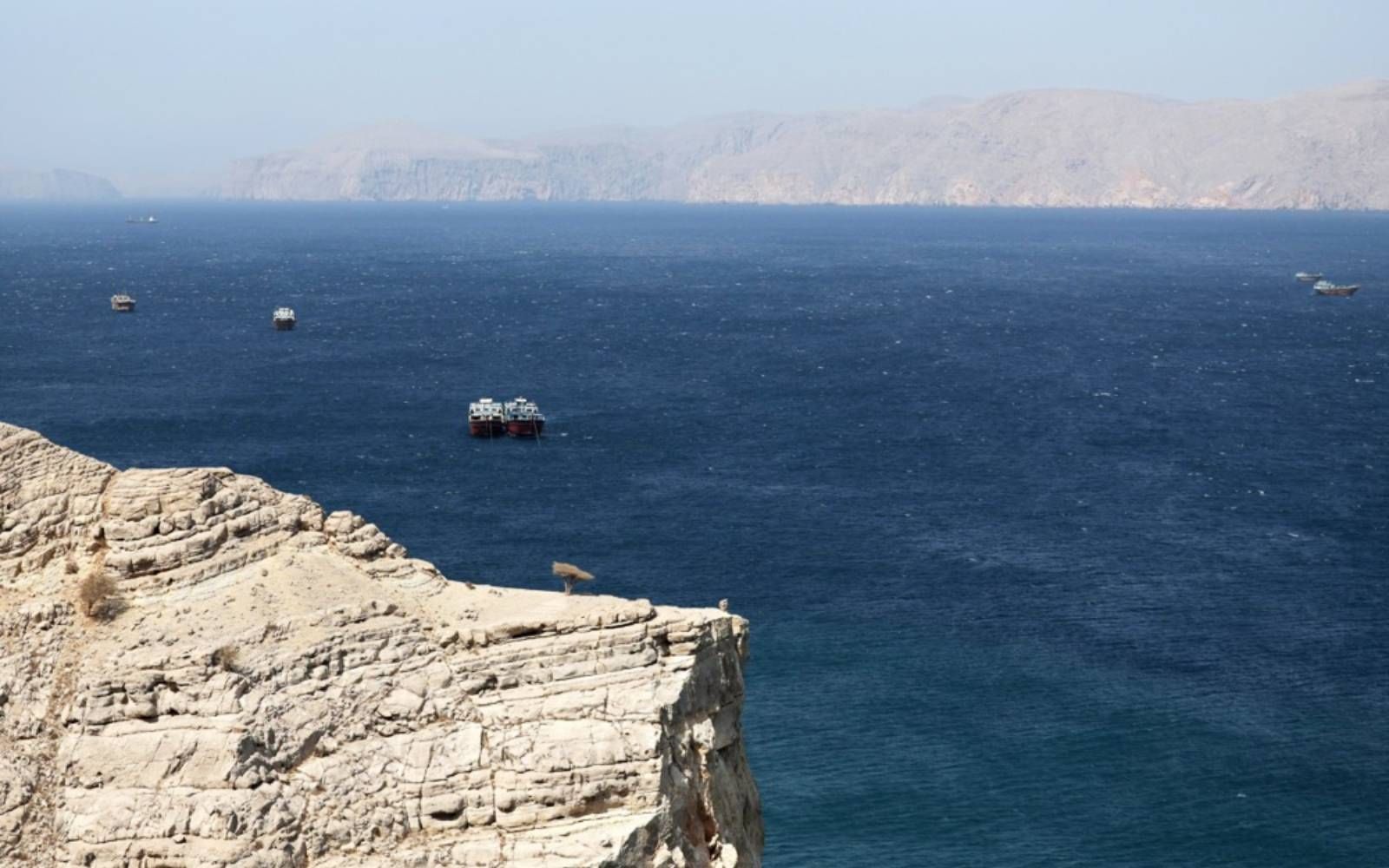
The leverage in question rests at the Strait of Hormuz. Iran’s stranglehold over that narrow but vital waterway has, in the calculus of this conflict, eclipsed even the nuclear question in its strategic weight. It is a development worth pausing over.
The illusion of collapse: what Tel Aviv and Washington saw and what was real
In the official narrative of Israel and the US, the end of the Gaza and Lebanon campaigns, combined with the fall of the Assad government in Syria, signified one thing — the collapse of the Axis of Resistance.
In this reading, decades of Iranian investment in a web of non-state actors — from Hamas to Hezbollah to the Popular Mobilisation Forces — had been reduced to ash overnight. Total victory appeared at hand.
But this narrative rested on a fundamental analytical error — the failure to draw the line between a blow and a collapse.
What actually occurred was not disintegration but a calculated tactical withdrawal. The Axis of Resistance sustained serious damage during the war. This should not be minimised.
But that damage unfolded within the inner logic of a long-term strategy — preserve the core, absorb punishment at the forward lines, and rebuild for the decisive moment.
Forces that receded from the surface were not dissolved. Structures that were damaged were not destroyed. And when the war entered a new phase, this Axis re-emerged in the field — not in its former shape, but with its original logic intact.
This pattern is familiar to any student of irregular warfare — survival, in itself, is a form of victory. And an Axis whose obituary had been written by Israel and the US demonstrated, in the crucible of the 12-day war, that it was still breathing.
Two strikes, one lesson
Before the war, Iran’s deterrence architecture rested on two interconnected pillars: asymmetric operations channelled through its network of proxy forces, and a methodical, incremental expansion of uranium enrichment. It was a slow-burning pressure campaign designed to keep adversaries uncertain without provoking open confrontation.
The 12-day war dealt a serious blow to Iran’s nuclear infrastructure. What has survived with its potency relatively intact is Iran’s ballistic missile and drone capability — a sharp military edge, but one effective primarily in direct confrontation and therefore of limited utility in the grey zones where Iran had traditionally operated.
Yet this same war delivered another lesson, this time for Tehran itself — a complete strategy cannot rest solely on proxy forces or nuclear ambiguity.
Iran needed a foundation that could neither be destroyed by missiles nor strangled by sanctions.
That foundation had existed from the very beginning. It only needed to be rediscovered.
The rediscovery of geography: the lever that recalculated everything
In the course of this war, Iran rediscovered geography as an instrument of power. The rediscovery was quiet — but its consequences ran deep.
The Strait of Hormuz is not a policy choice. It is a fact of the physical world. Nearly 20% of global oil supply transits through that narrow channel.
Every major economy with a stake in energy security must, at some level, factor Iranian geography into its strategic thinking.
This is an enormity that ideology cannot replicate and that military strikes, however precise, cannot eliminate.
But this time, something new took shape — a still-living Axis of Resistance, combined with an Iran that had arrived at a fresh and sharper understanding of its own geographic weight.
That combination fundamentally altered the calculations of every party involved.
For Israel, the notion of “total victory” lost its coherence. An Axis presumed dead had returned to the field, and any strike on the Strait of Hormuz meant igniting a fire that Tel Aviv lacked the capacity to contain.
For the US, Hormuz pushed the nuclear file off the top of the agenda. Washington, which had long viewed Iran almost exclusively through the lens of uranium enrichment, was suddenly confronted with a reality it had not fully accounted for — a geographic Iran, not merely a nuclear one.
For the Arab states of the region, the equation shifted as well. Those who had watched the blows against the Axis of Resistance with quiet satisfaction discovered that a geopolitics-driven, pragmatic Iran is not necessarily more manageable than an ideological one — it may, in fact, be considerably more complex.
From revolutionary state to geopolitical actor
Since the 1979 revolution and until the eve of this war, Iran operated primarily as an ideological entity.
Its foreign policy was shaped, at times dominated, by the imperatives of Islamic revolutionary doctrine — exporting resistance, confronting American hegemony, and sustaining a pan-Islamist narrative that transcended borders.
This framework had its uses, but it also produced rigidities. It locked Iran into alliances and antagonisms that were more theological than strategic.
The current war may mark a decisive inflection point. The ideological scaffolding has been structurally weakened — not necessarily abandoned, but subordinated.
In its place, a more pragmatic and explicitly geopolitical calculus appears to be taking shape.
This does not mean a peaceful or accommodating Iran. The post-war Iranian state will likely be simultaneously less doctrinaire and more militarised.
The Axis of Resistance, too — contrary to the portrait drawn by Washington and Tel Aviv — will not be dissolved but redesigned: shaped by the hard lessons of this round, built on more resilient structures, and grounded this time in geography rather than ideology alone.
The foundation that does not move
There is an old maxim in geopolitics that reduces the complexity of international power to a simple formulation — location, location, location. Geography is the deepest substrate of strategic position.
Unlike armies, alliances, or ideologies, it cannot be destroyed, devalued, or negotiated away.
Iran sits astride the exit of the Persian Gulf. It commands the northern shore of the Strait of Hormuz. It borders Iraq, Turkey, Pakistan, Afghanistan, Armenia, and Azerbaijan.
It connects the Caspian Sea to the Indian Ocean. These are not assets that any military campaign can neutralise, and no diplomatic settlement can transfer.
The lesson that Iran appears to be internalising — belatedly, perhaps, but unmistakably — is the one that history’s most enduring powers have always understood. In the final accounting, geography is the hand that does not change.
And what this war made plain is that the combination of a living Axis of Resistance with a geographically awakened Iran produced an equation for which neither Israel, nor the US, nor the Arab states of the region were adequately prepared for.
Geography has always been Iran’s silent inheritance from providence. What has changed is not the gift — but Iran’s decision to use it, openly, as strategic leverage.
Abdolreza Alami is a senior lecturer at Universiti Teknologi Mara Malaysia.
The views expressed are those of the writer and do not necessarily reflect those of FMT.