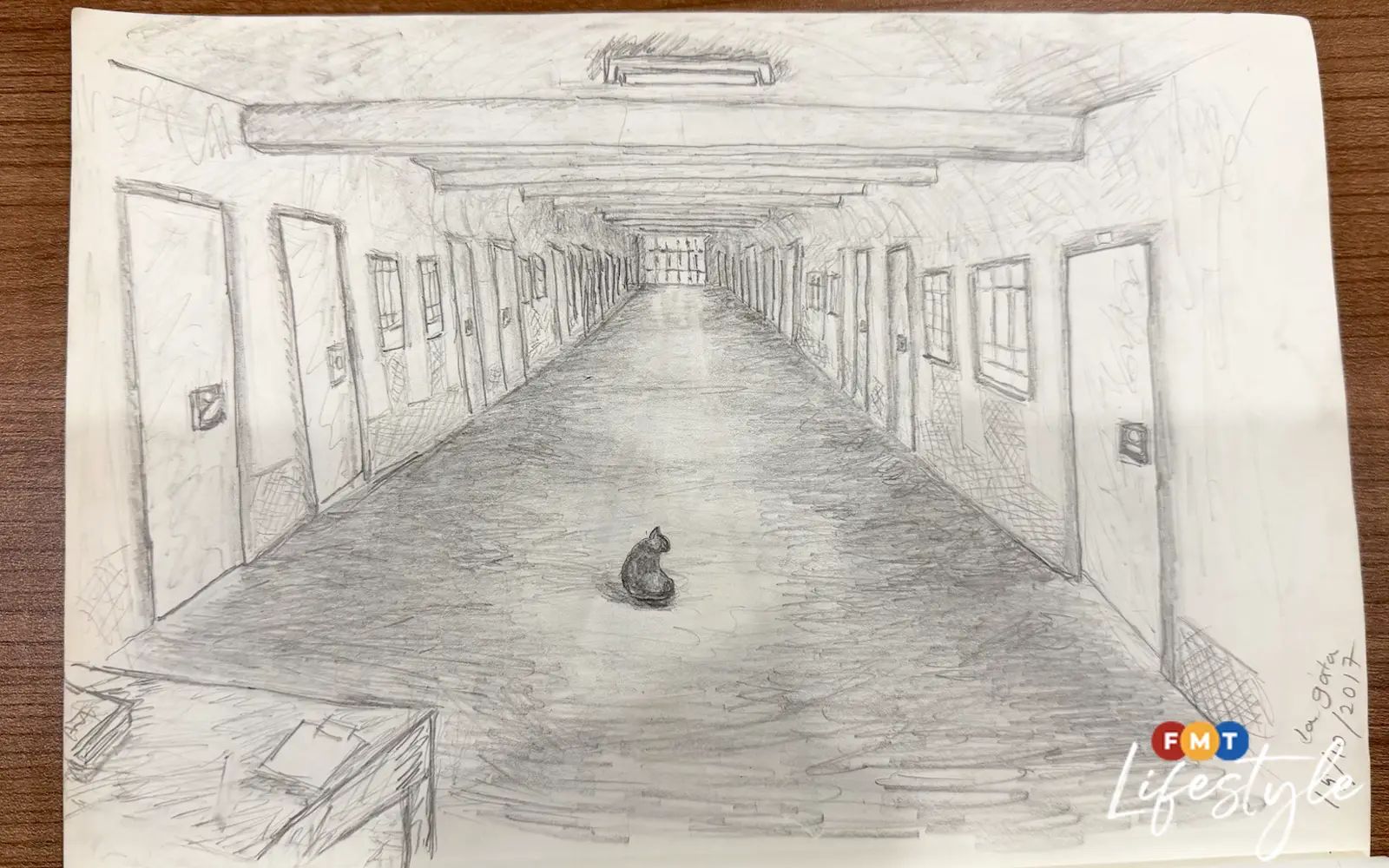
When he noticed the almost poetic juxtaposition, he knew it had to make it into his secret sketchbook.
“She was so relaxed and just standing there, while everyone else was under high security. A small creature that had absolute freedom to be everywhere,” ex-PKR vice-president Tian Chua told FMT Lifestyle.
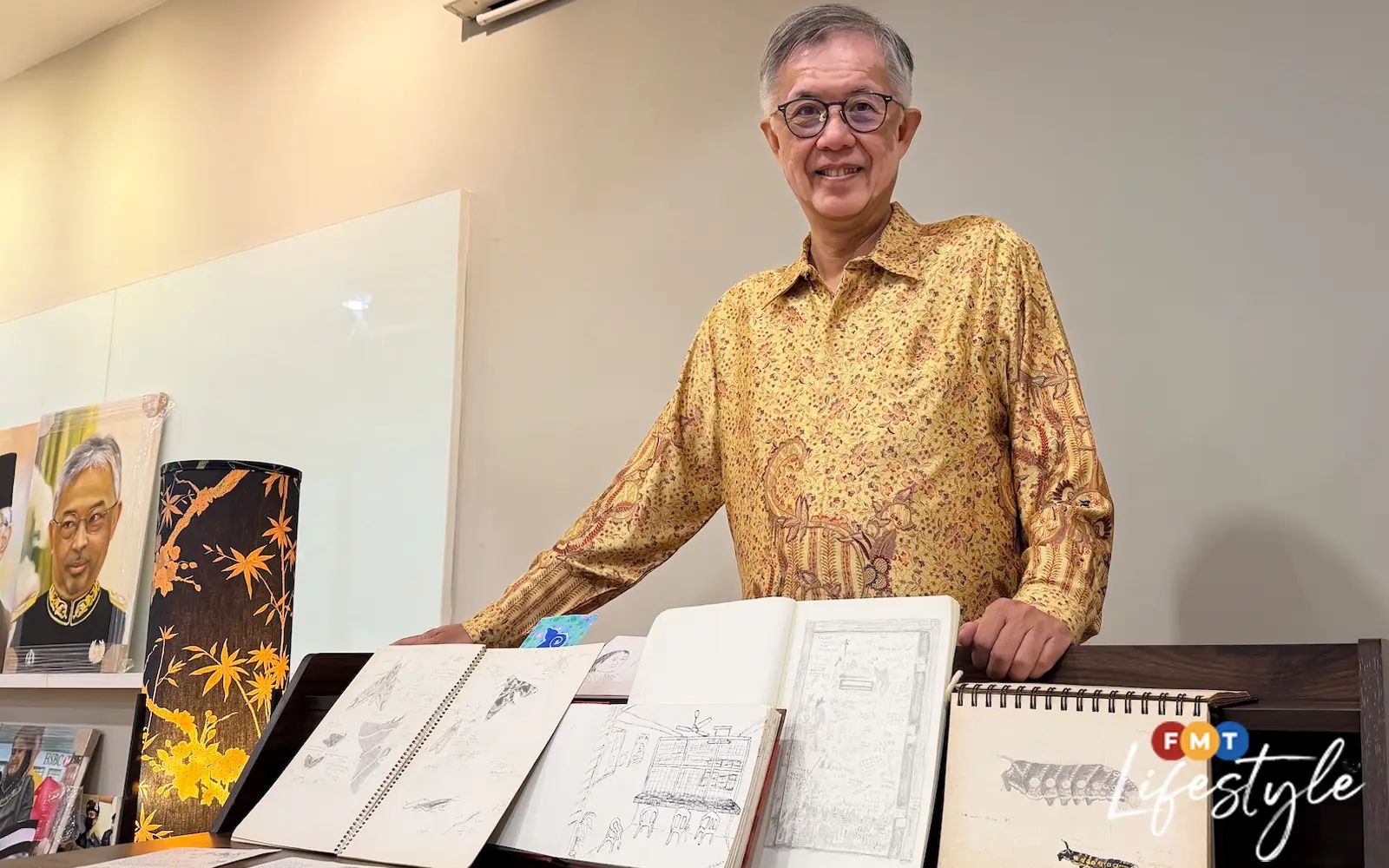
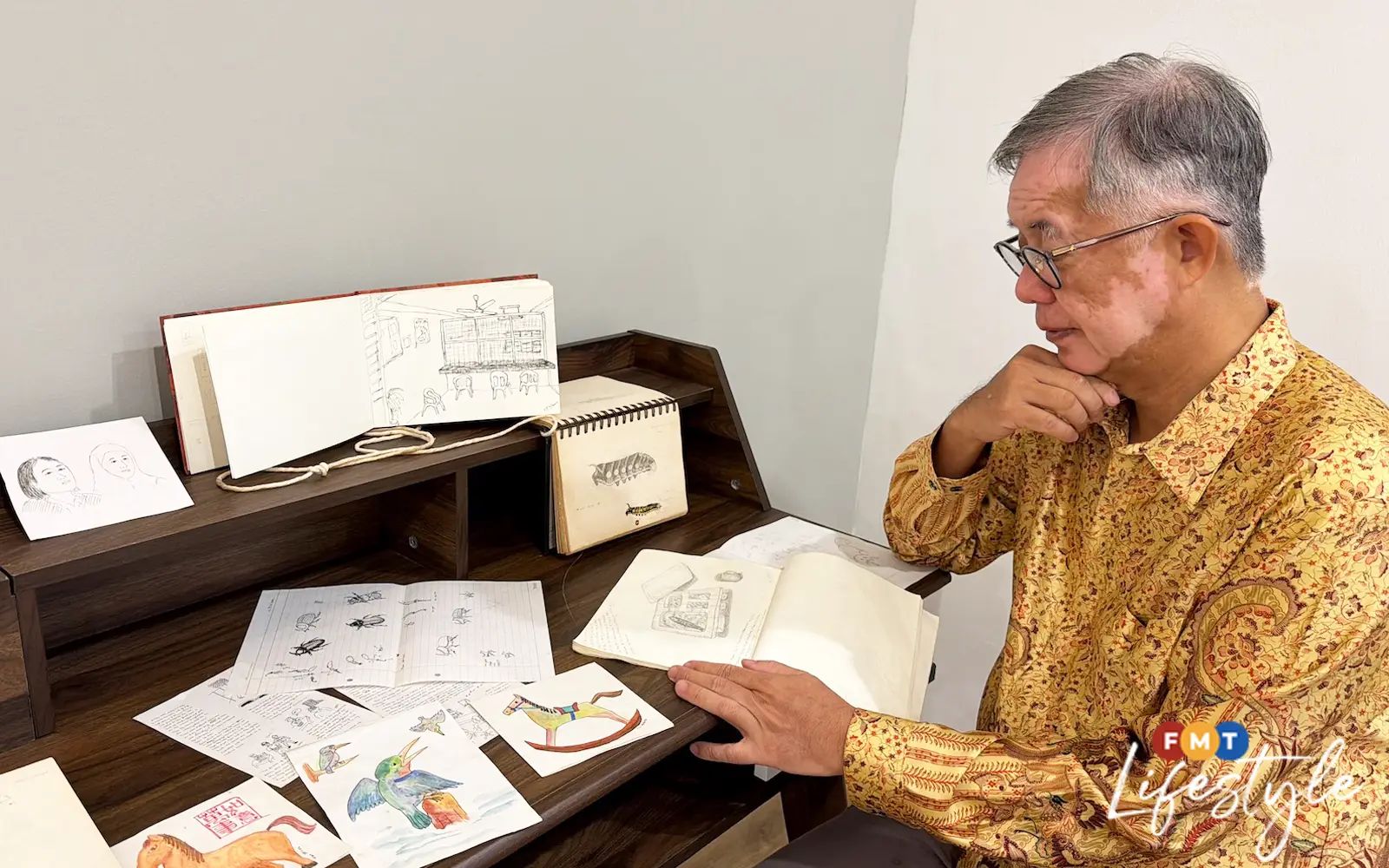
The former Batu MP recorded much of his time behind bars at Kajang Prison in 2017 in his sketchbooks, amassing visuals that range from meal trays and the prison compound to creepy crawlies.
Next year, a collection of his prison drawings will be showcased in Germany during Berlin Art Week and the interdisciplinary Festival eXoplanet by Theatre Magdeburg, with support from the Steinbeis Foundation.
“These drawings were never about helping me with my mental health while I was in prison – it was about making use of the time. It made time pass very fast,” the 62-year-old explained.
“In fact, I felt the time was too short, and that if I had stayed longer, I could have done a lot more.”
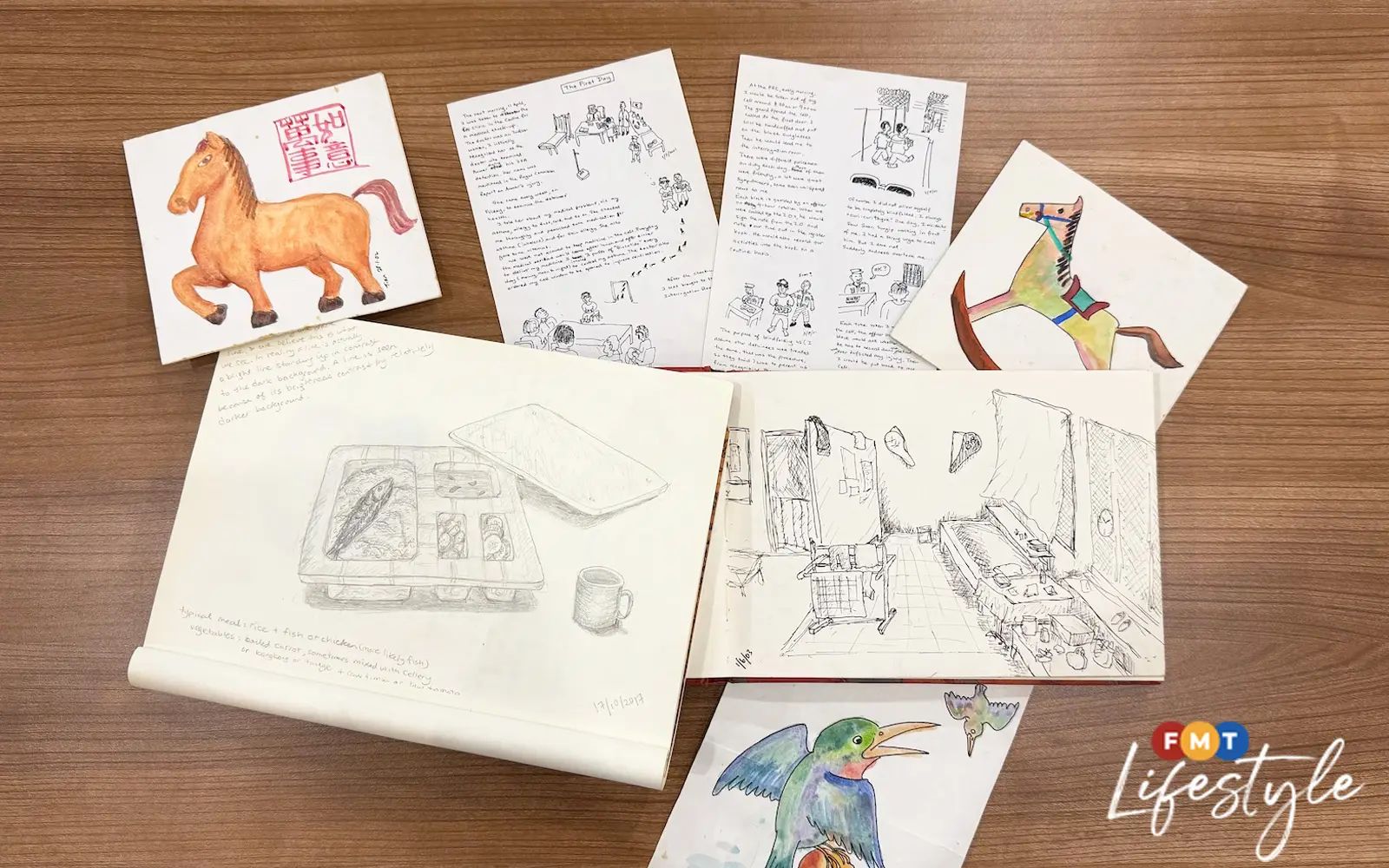
Tian Chua’s works, alongside those by other participating artists – Lee Cheow Hee, Daeng Ramli Akil, Nor Azlan, Habsah Abang Saufi, and James Yip – are currently on display at the newly launched Steinbeis University Asean Regional Hub Centre in Berlin.
Yip, who is also the event organiser and an educator, noted that art can be cathartic, especially given the fact that prison is “not an inspirational place”.
“Tian Chua was driven by an inner passion and compulsion to just draw, draw and draw,” he commented.
Overcoming boredom, killing time
Primarily known for his political career and advocacy work, many may not know that the Melaka-born Tian Chua has liked art since he was a schoolboy.
“It was purely for fun. I wasn’t aspiring to be an artist or something – except for the year the Apollo spaceflight was sent to the moon, and everyone drew spaceships and the moon at school.
“My drawing was sent to Japan for a small exhibition,” he shared.
He could not have known that his artistic proclivities would one day come in useful at the Kamunting detention camp, where he spent two years after being charged under the Internal Security Act in 2001 for his involvement in the Reformasi movement.
In those early days of detention, with no materials and total isolation, he created using whatever he could get his hands on.
Rubber bands were first used to track time, then to shape simple objects like a congkak board. Bread came next: rolled, dried, and used as marbles. Soon, he was sculpting them into lizards, fish, and even human figurines.
“The key challenge in detention was overcoming boredom. You have to find ways to occupy yourself. It was very important for me to use art as a way to kill time,” he recounted.
Later, during his month-long stint at Kajang Prison, he had to surreptitiously obtain a supply of papers and sketchbooks.
“I pretended it was a reading book. I also stole a ballpoint pen from the counter. That’s how I was able to sketch.”
One of Tian Chua’s most striking drawings captures his cell door, its inner side covered in graffiti left by past occupants – a living time capsule.
Recreated in detail, the scribbles speak volumes: “tak nak masuk lagi” (“don’t want to be in prison anymore”); “use ur brain”; “bebas jamin” (“freedom guaranteed”); and “tolong” (“help”) reveal raw glimpses into the prisoners’ state of mind.
“I won’t call myself an artist, but perhaps Steinbeis is interested in showcasing to a larger audience the artistic expressions of activists under detention or in different circumstances,” he reflected.
These days, Tian Chua relishes writing as a way to express himself. Perhaps someday, these musings, too, will find their way to a global audience.