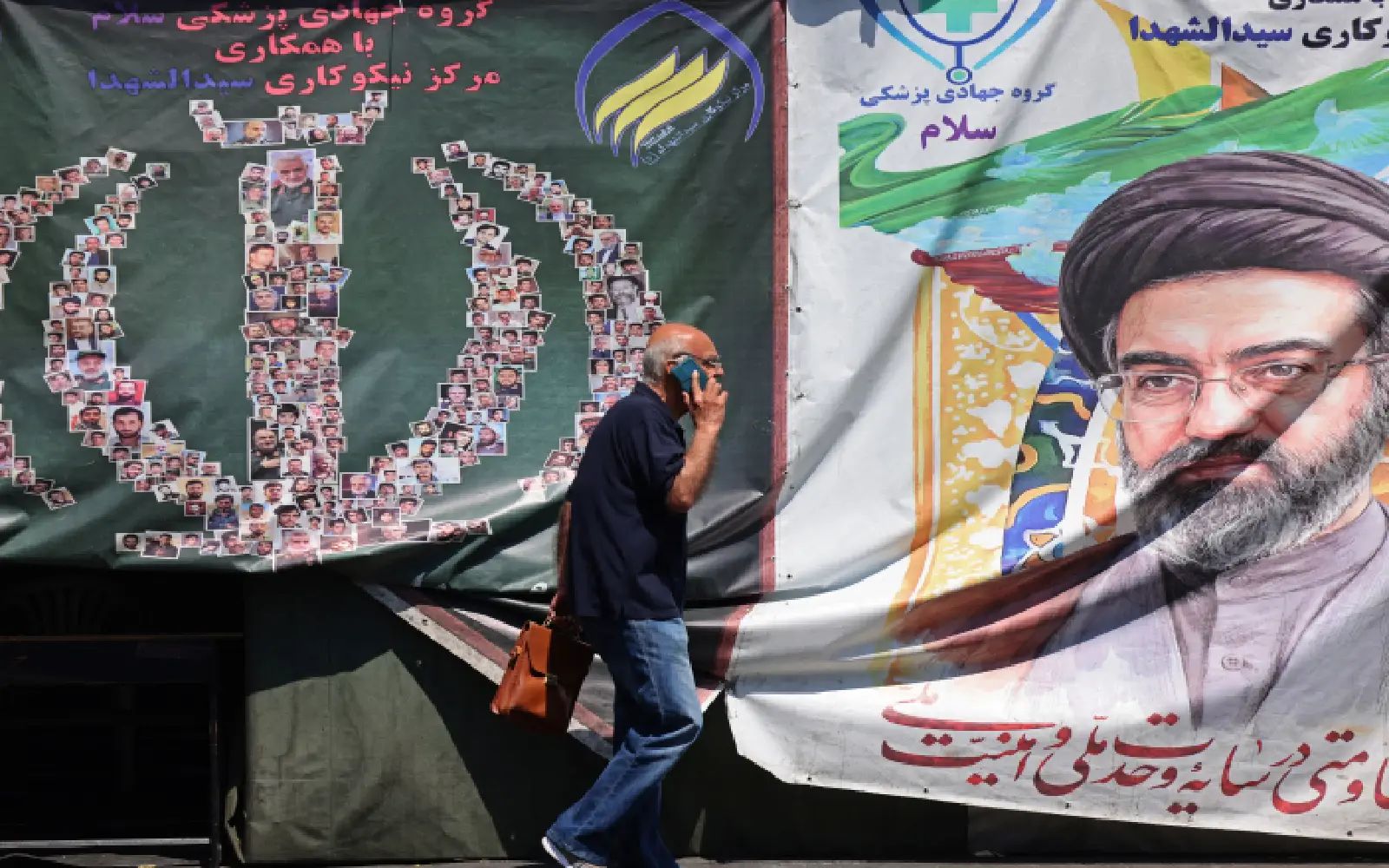
The Tasnim and Fars news agencies reported that air defence systems, heard in some parts of the Iranian capital, were activated “to counter small aircraft and reconnaissance drones” for around 20 minutes but that the situation had returned to “normal”.
US President Donald Trump’s administration faced a looming midnight deadline to secure congressional authorisation for the war against Iran, setting up a clash between the White House and Congress.
The Trump administration argued that the 60-day clock to seek authorisation was effectively paused by a ceasefire announced last month.
“For War Powers Resolution purposes, the hostilities that began on Saturday, Feb 28 have terminated,” a senior administration official told AFP late on Thursday, noting that there has been no exchange of fire between the United States and Iran since the April 7 ceasefire.
Shameful defeat
Earlier on Thursday, Iran’s supreme leader declared that the United States had suffered a shameful defeat, defiantly rejecting a warning from Trump that an economically punishing US naval blockade could be enforced for months to come.
Oil prices hit a four-year high, then fell back slightly before Mojtaba Khamenei issued a written statement read on state television declaring that Iran was now in the driver’s seat in the crisis.
“Today, two months after the largest military deployment and aggression by the world’s bullies in the region, and the United States’ disgraceful defeat in its plans, a new chapter is unfolding for the Persian Gulf and the Strait of Hormuz,” he said, hailing Iran’s control over shipping in the strait.
He went on to predict a bright future for the Gulf without the United States, saying those who interfere in the region from afar “have no place there except at the bottom of its waters.”
Khamenei was wounded in the initial US-Israeli strikes that killed his father, Ali Khamenei, and has not been seen in public since being named his successor as supreme leader in March.
The United States imposed a blockade on Iran’s ports two weeks ago, while the Islamic republic has maintained its stranglehold over the strategic Strait of Hormuz since the start of the Middle East war at the end of February.
Washington is now seeking to assemble an international coalition of allied states and shipping firms to coordinate safe passage through Hormuz — while maintaining its blockade of ships serving Iran, a State Department official told AFP.
Trump threatened Thursday to withdraw US troops from Italy and Spain, extending similar warnings already made against Germany, after lambasting the Nato allies for failing to support US-Israeli operations against Iran, including in the Strait.
Act again
Israeli Defense Minister Israel Katz warned meanwhile that it was “possible that we may soon have to act again” against Iran to achieve the war’s objectives.
But the commander of the Iranian Revolutionary Guards aerospace force, Majid Mousavi, said even a “short and tactical” enemy operation would be met “with painful, prolonged, and extensive strikes.”
Tehran residents speaking earlier to AFP journalists in Paris described a sense of despair that the Islamic republic government was clinging to power and that negotiations had stalled.
“From the Islamic Republic still being in place to the innocent people whose lives were destroyed in this war, everything is so disappointing,” one 28-year-old IT worker told AFP via messaging app from the Iranian capital.
Intolerable
Trump has reportedly told oil executives and national security officials this week to prepare for a prolonged US blockade designed to force Tehran to surrender its nuclear programme.
US Central Command said Wednesday it had redirected a total of 44 commercial vessels to violate the blockade as part of its blockade of Iran.
Iranian President Masoud Pezeshkian said the blockade of his country’s ports was effectively an “extension of military operations” by Washington, despite the ongoing ceasefire.
“Continuation of this oppressive approach is intolerable,” he added.
Oil prices struck a four-year high Thursday. International benchmark Brent crude soared more than seven percent to US$126 a barrel before easing in afternoon trading in London.